
Picture yourself a year from now, catching a glimpse of it in the mirror. You already know it’s right. You already can’t remember worrying about whether it would be.
That’s the version of this you want to get to. A decision that becomes part of you so naturally that the second-guessing eventually seems strange to think about. Most people who choose deliberately — who spend time on design, who find the right artist, who see how it looks on their body before committing — end up there. The ones who don’t usually know exactly where the process went sideways.
The short answer: A first tattoo you won’t regret comes down to four decisions — design, placement, artist, and timing. Research consistently shows that impulse decisions, amateur artists, high-visibility placements chosen without thought, and designs tied to other people are where regret concentrates. Nail those four, and the odds are strongly in your favor.
This guide covers the entire journey: from deciding what you actually want through choosing where it goes, what to expect in the chair, and how to protect it after. It links out to deeper dives on every major topic — use it as your roadmap.
The Design Decision Is Where Most Regret Starts
Before placement, before artist, before anything else: what do you actually want on your body?
This sounds obvious. It’s not. The design question is where first-timers most often shortcut the process — and where regret concentrates the most. Research from the Indian Journal of Dermatology found that 26% of tattooed people regret at least one tattoo, with early age and impulsive decisions as the strongest predictors. Among designs specifically, lettering and partner-related imagery carry regret rates of 30–32%. Small flash tattoos chosen spontaneously: 60%+.
The designs that hold up over time share a pattern: they’re tied to something stable about who you are, not something contingent. Religious or spiritual imagery. Personal symbols with private meaning. Aesthetic choices made purely because you love the image and have loved it for a long time. Artist-designed pieces created in collaboration rather than downloaded in five minutes.
The practical filter: have you wanted this specific design for at least six months? That’s not an arbitrary threshold — it’s the point at which trend-chasing has usually faded and what remains is something real. If you discovered the design two weeks ago and already want to book, that’s not a reason to stop. It’s a reason to wait a little.
For the full breakdown of design decisions and regret patterns, see why tattoo regret happens and how to avoid it.
The Style Question Shapes Everything That Follows
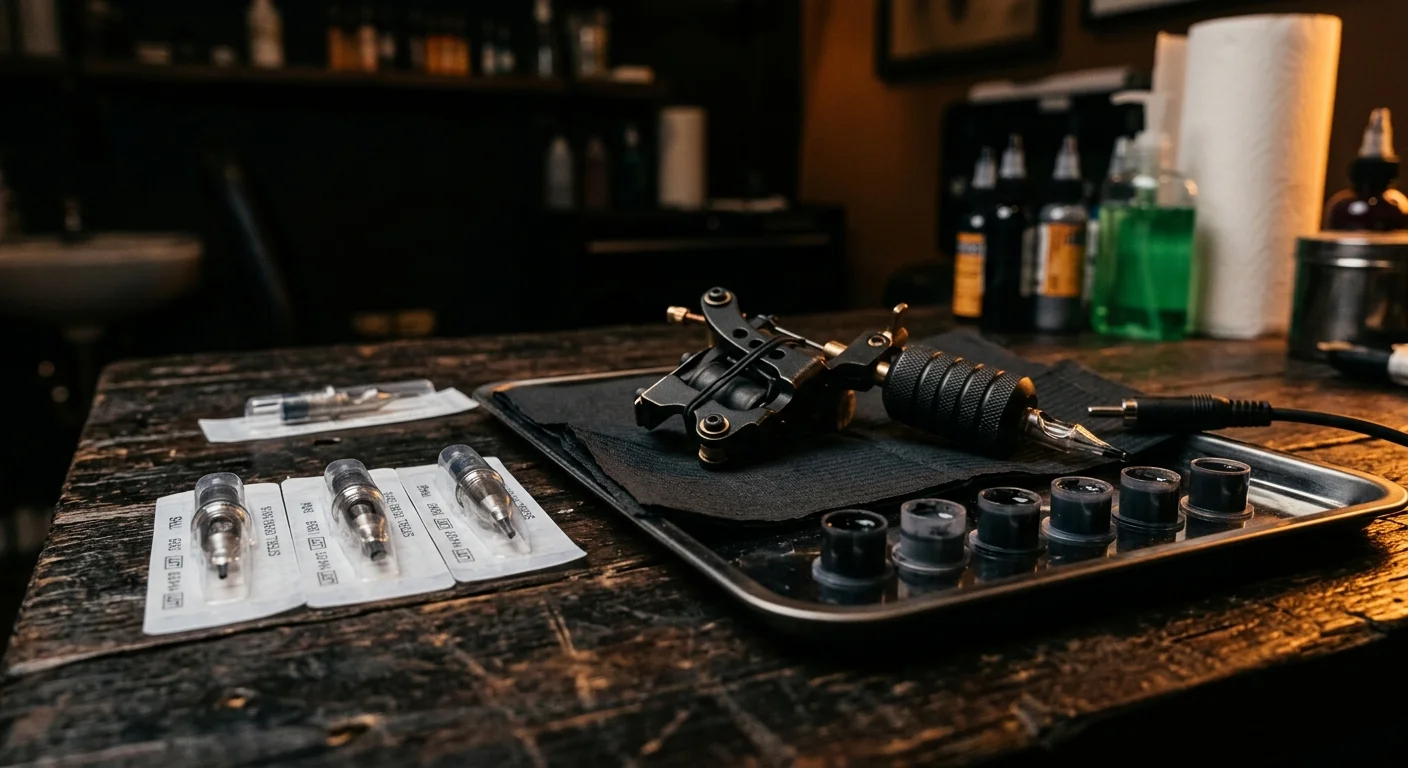
Tattoo styles aren’t just aesthetic categories — they have real implications for longevity, artist requirements, and how the design will read in five or ten years.
Fine line / minimalist: Delicate, precise, beautiful when done well. More sensitive to sun exposure and placement choice than bolder styles. Requires an artist who specializes in fine line work specifically — not just any skilled tattoo artist. Ages well in shielded placements; fades noticeably faster on forearms or wrists without consistent SPF protection.
Blackwork / bold traditional: Higher ink volume means more resilience over time. Bold outlines age more gracefully than hairline strokes, holding legibility even as ink settles in the dermis over years. More forgiving of placement choices. Often lower barrier to entry in terms of finding a competent artist.
Watercolor / brush stroke styles: The ones that look most dramatic in portfolio photos. Also the ones that are hardest to maintain long-term — light washes fade faster than saturated lines, and the style’s organic edges can blur. A beautiful first tattoo; needs more care and realistic expectations.
Geometric / dotwork: Precise and technically demanding. Detail holds well when done correctly. Requires an artist who works in that specific vocabulary — the placement-aware geometry of a good geometric tattoo is not improvised.
For most first-timers, bold linework or a well-executed fine line piece in a forgiving placement is the lowest-risk starting point. The style that photographs best is not always the style that ages best. Know what you’re trading.
Placement: The Decision Most People Under-Think
Placement is responsible for 41% of tattoo regret — more than design style, more than anything except changing personal meaning. Most people imagine a design in a specific spot, book the appointment, and discover in the studio that it lands differently than they pictured. Or they choose visibility over practicality and eventually wish they hadn’t.
The first-timer sweet spots:
- Outer forearm — manageable pain, heals cleanly, ages well with consistent sunscreen, easy to see yourself, high visibility but readily concealable in long sleeves
- Upper arm (bicep or tricep) — among the least painful placements, excellent for larger designs, low UV exposure keeps ink sharp longer
- Calf — large canvas, low pain, rarely sun-exposed, forgiving on aging
The higher-risk first choices — not because they look bad, but because they require more from you:
- Ribs / sternum — significant pain, healing complicated by movement and clothing friction, requires a compelling reason to start here
- Hands, fingers, feet — constant friction, rapid fading, frequent touch-up commitment
- Neck, face — visibility stakes are different, professional context risk is real, highest regret rates by placement category
- Inner wrist — more sensitive than most expect, fades faster than arm placements
For a complete placement breakdown with regret data by location, see best placements for your first tattoo. And if you’re choosing between specific spots, the full tattoo placement guide covers every major location with design and aging tradeoffs.
Choosing an Artist: The Variable That Changes the Odds Most
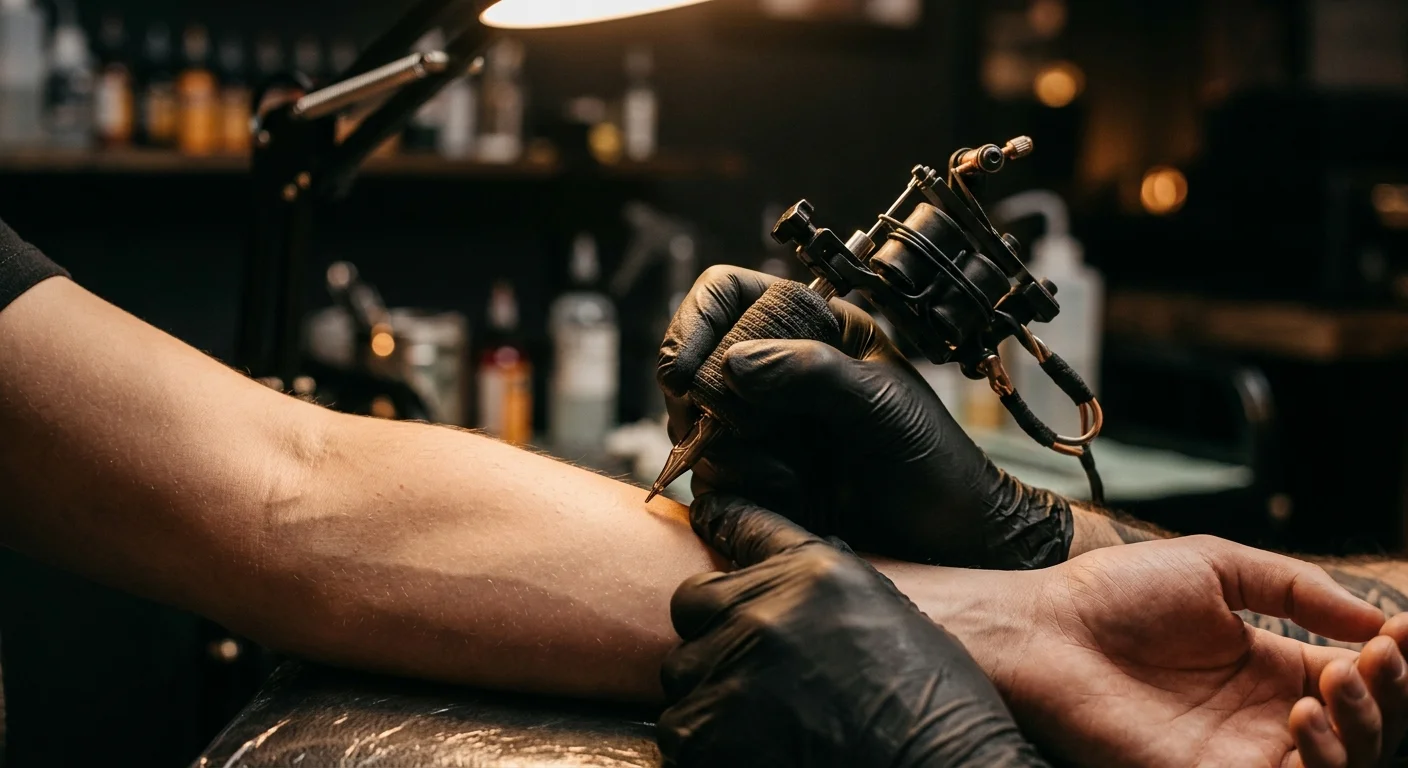
This is the most underrated decision in the entire process. Research shows that tattoos done by amateur artists carry a 43% regret rate — more than double the 19% seen with professional work. Professional tattooing reduces regret odds by more than half. That’s not a small difference.
What “professional” actually means here: licensed, working in a registered studio, with a portfolio of healed work you can review. Not just someone who does good work in reference photos. Fresh tattoo photos look sharp in almost anyone’s hands. Healed work — three months to a year out — shows who can actually make a design last.
When you’re researching artists:
Portfolio dive on healed work. Ask explicitly. Many artists post fresh-only. The healed photos are the honest ones.
Match specialty to style. A fine line specialist and a traditional bold artist are different practitioners. An artist who does stunning watercolor portraits may not be who you want for precise geometric work. Instagram is your friend here — find artists who post work in your specific style.
Consultation first. Any reputable artist expects a consultation before booking for custom work. This conversation is how you evaluate whether they understand what you’re asking for — and whether you trust them.
Health and safety standards. The Alliance of Professional Tattooists sets bloodborne pathogen and sterilization standards for the industry. A licensed shop should use single-use needles, sterile equipment, and follow documented safety protocols. Ask. If it creates discomfort to ask, that’s information.
One practical note: flash tattoos (pre-designed, off-the-wall selections) from reputable shops are not automatically inferior. A skilled artist’s flash is a skilled artist’s work. The regret risk with flash comes from impulsive same-day decisions on designs that weren’t resonant — not from flash as a category.
If you’re working out what “quality artist” means in dollars — what’s inside the hourly rate and why it’s priced the way it is — the tattoo cost guide breaks it down clearly before you sit across from a quote.
What to Expect in the Chair
First tattoo nerves are nearly universal. The anticipation is reliably worse than the session itself. For the complete session breakdown — from stencil approval through the first 24 hours — the full guide to what to expect during your first tattoo covers every stage. Here’s the overview:
Before the appointment: Eat a solid meal two hours before. Hydrate well the day before and morning of. Avoid alcohol for 24 hours — it thins blood and affects how ink sits. Wear clothing that gives your artist easy access to the placement without having to work around seams or straps.
The stencil: Your artist will apply a transfer stencil to your skin before starting. This is the moment to check placement carefully. Say something if it’s not exactly where you want it. Moving a stencil is a two-minute task. Fixing a misplaced tattoo is not.
The sensation: Consistent with a burning scratch — uncomfortable, sustained, but not sharp or escalating for most placements. The first few minutes are typically the most acute. Your body’s adrenaline response kicks in, and the sensation often becomes easier to manage. Longer sessions can intensify toward the end as skin gets more sensitive.
Communication: Let your artist know it’s your first time. Every experienced tattoo artist has a pacing rhythm for first-timers. They’ll check in. You can ask for breaks. Needing a moment is not a problem — rushing through a difficult moment and ending up with a compromised tattoo is.
If you’re dealing with significant pre-session anxiety, the detailed guide to first tattoo anxiety breaks down exactly what helps for each type of nervousness — and what doesn’t. And if you’re still not sure what the physical experience is actually going to feel like, the honest guide to what getting a tattoo feels like covers the sensation, by placement, without the exaggeration.
Aftercare: The Ten Days That Decide the Next Ten Years
The session is the beginning, not the end. What you do in the first two weeks determines how your tattoo looks for the rest of its life.
The basics:
First few days: Your artist will apply a bandage or medical-grade adhesive wrap (second skin). If it’s second skin, leave it on for 3–5 days. If it’s regular wrap or gauze, remove it after a few hours, wash gently with fragrance-free antibacterial soap, and apply a thin layer of unscented moisturizer. Do not re-wrap.
Week one: Wash twice daily, moisturize lightly, wear loose clothing over the area. Expect weeping, minor oozing, and initial redness — this is normal. Cleveland Clinic dermatologists note that weeks two through four bring peeling and itching as the outer skin layer sheds. This is where most people damage their tattoo: picking, scratching, or letting scabs pull. Don’t.
What to absolutely avoid: Direct sun on the healing tattoo for the first four weeks. Swimming, soaking, or submerging. Tight clothing rubbing the area. Petroleum jelly (blocks pores, can affect ink). Picking scabs — every pulled scab is ink pulled out.
Long-term: Once healed, the American Academy of Dermatology recommends applying SPF 30+ broad-spectrum sunscreen every time your tattoo will be in direct sun — and reapplying every two hours. UV is the primary driver of ink fading over time. This is not a temporary aftercare step. It’s lifelong maintenance.
For the full phase-by-phase breakdown, the complete tattoo aftercare guide covers every week in detail.
The One Thing First-Timers Consistently Skip
Here’s the part of the process most people don’t know exists: seeing the tattoo on your actual body before you book.
Not on someone else’s forearm in a reference photo. Not in your imagination. On your skin, at your scale, in your placement.
The reason this matters: YouGov data shows that people tattooed before age 21 are five times more likely to regret their tattoo than those who waited — 38% vs. 7%. The regret mechanism isn’t usually about the design itself — it’s about the gap between what they imagined and what they got. Scale wrong. Placement slightly off. A design that read beautifully in a reference photo but landed differently on their proportions.
That gap is closeable. TattThat lets you upload a photo, place any design on your actual body, drag and resize until it lands exactly where you’re thinking, and see a photorealistic rendering on your skin — before any appointment is booked. For a first-timer navigating the permanent decision spiral, that confirmation step isn’t optional. It’s how you walk into the studio knowing exactly what you’re getting, instead of hoping the stencil matches the picture in your head.
Two free previews, no card required. The decision you’ll look back on clearly starts with seeing it clearly.
Each stage of this process has its own deep dive if you want it: numbing cream if pain is your main concern, how to choose a tattoo artist if you’re not sure where to start with studios, and what getting a tattoo actually feels like if the sensation question is keeping you up at night.
See It on Your Skin Before You Commit
Upload a photo, pick a design, and see exactly how it'll look — in seconds. 2 free previews, no card required.
Try TattThat Free →