The quote is $280 per hour. The piece you want is three hours, minimum. You’re doing the math in your head, and a number like that feels harder to say yes to than you expected.
You start looking around. An artist in the next town charges $120. Your coworker knows someone who does it out of their home studio for $80. The design is the same. How different can the outcome be?
The answer is: quite different, and in ways that aren’t visible until six months later.
The direct answer: Tattoo pricing reflects a professional’s total overhead — equipment, studio costs, licensing, training — not just the time the needle is running. Small tattoos typically run $150–$400, medium pieces $400–$1,200, large work $2,000–$10,000+. The variables that shift quotes dramatically are design complexity, placement access, and artist experience. The real hidden cost isn’t in the quote — it’s in what happens when you try to fix work that wasn’t done well.
What’s Actually Inside the Hourly Rate
A $200/hour tattoo artist isn’t charging $200 for their time. They’re charging $200 to cover the actual cost of running a professional practice.
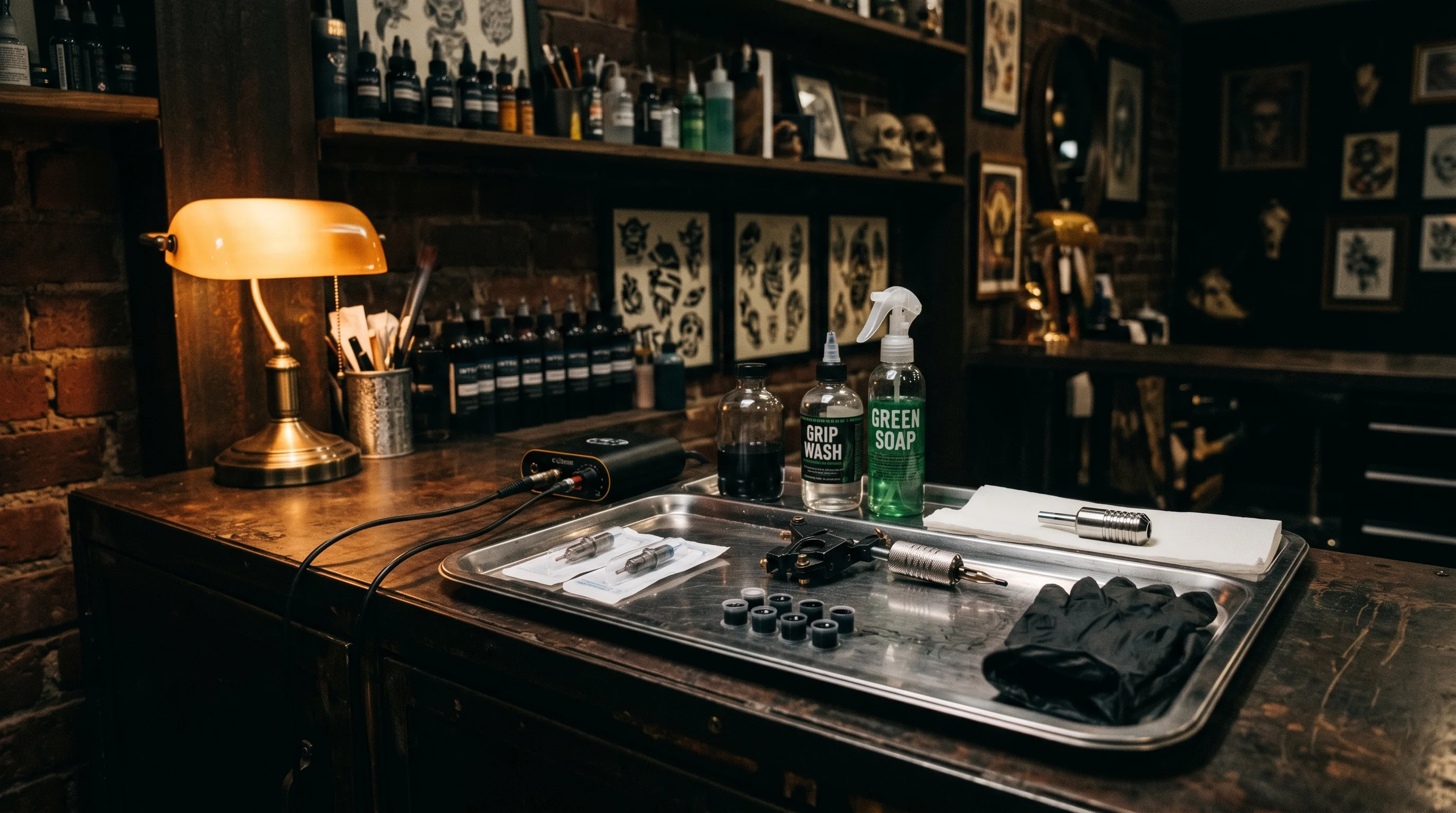
Tommy’s Supplies breaks down what professional tattoo rates actually cover: studio booth rent (often $400–$800 per week, whether or not they work that many hours), professional-grade equipment ($400–$1,000 per tattoo machine, plus power supplies, foot pedals, armrests), single-use needles and ink cartridges for every session, autoclave sterilization and biohazard disposal, state licensing fees, liability insurance, and continuing education. Artists also spend unpaid time drawing custom pieces, consulting clients, and managing bookings.
When all of that is factored in, what looks like an hourly rate is closer to a professional’s actual margin after costs — which for many working artists is thinner than it looks from the outside.
The implication: the artist charging $80/hour out of a home setup is either not covering their actual costs (which raises questions about what they’re cutting), or they’re in their first year building a portfolio. Neither is automatically wrong — apprentice pricing is how artists develop their craft, and some home studios are completely legitimate. But the rate is a signal, not just a number.
How Quotes Actually Get Built
Most professional artists price tattoos one of two ways: by the hour, or as a flat rate for the whole piece. Here’s how each works and what it means for your final number.
Hourly pricing is more common for larger, more complex work where design execution time is genuinely uncertain — detailed portrait realism, full sleeves, pieces with intricate shading. Hourly rates typically run:
- Newer/apprentice artists: $80–$130/hour
- Established professionals (2–5 years): $130–$200/hour
- Experienced, in-demand artists: $200–$350/hour
- Heavily-booked, high-profile artists: $400–$600/hour+
Flat-rate pricing is common for simpler, time-predictable pieces — flash designs, small geometric work, straightforward script. The rate is usually calculated against an internal hourly estimate with a buffer, so flat-rate pieces often come in slightly above pure hourly cost. The upside: you know the number before you walk in.
The deposit deserves attention. Most professional artists require a deposit ($50–$200 depending on the piece size) to hold your appointment. The deposit is typically applied against your final cost — but it’s non-refundable if you cancel or significantly change the design last-minute. Budget for it as part of the total.
The Variables That Shift the Quote Dramatically
Same design, different price. Here’s why:
Placement. Areas that are hard to access — ribs, sternum, back of the neck, spine — take longer per inch because the artist is working around curves, has less comfortable client positioning, and needs to work more carefully. Expect 10–20% more time than the same design on a flat, accessible surface like the outer forearm.
Design complexity. Solid fills, fine linework, photorealistic shading, and multiple colors all require significantly more time than simpler designs. A botanical outline in black at 3 inches might take 90 minutes. The same piece with color fills and background shading might take four hours.
Touch-ups. Most professional artists offer one free touch-up within the healing period — typically three to six months after the session. After that, touch-ups usually run at the artist’s standard rate. This matters most for fine-line work, white ink, and pieces on high-friction placements (hands, feet, wrists), which are more likely to need attention as the skin heals.
Size and scale. The hourly comparison is misleading for pieces that involve more than just the design — larger work means more prep time, stencil application, and breakdown per session. A 10-inch back panel isn’t just five times the hourly cost of a 2-inch forearm piece.
The Costs That Don’t Show Up in the Quote
Three categories of cost nobody adds up until they’ve already happened:
Aftercare. A proper aftercare kit — unscented soap, fragrance-free moisturizer, SPF for the healed piece — runs $30–$60 for the first month. Not a significant number, but worth factoring in. For fine-line and color work, SPF on exposed placements isn’t optional; it’s the variable between a crisp piece at five years and a faded one.
Touch-ups beyond the free session. High-friction placements (fingers, inner wrists, feet) often need a second round six to twelve months in. If the artist’s free touch-up window has passed, budget an additional session.
Removal. A single laser tattoo removal session costs $200–$500. Most removals require 6–15+ sessions for complete fading, putting full removal at $1,500–$7,500+ depending on ink density, placement, and ink colors. This math is worth doing once, before you book with the $80/hour option, not after. Research consistently shows that technical failure and aging poorly are among the leading reasons people regret their tattoos — and regret is significantly more common with informal or inexperienced artists.
Where It’s Worth Paying More (and Where It Isn’t)
AARP’s 2024 survey of 3,076 adults with tattoos found that 75% are completely satisfied with their ink — but satisfaction is highly correlated with deliberate decision-making, not with spending more money overall. The question isn’t whether to spend — it’s where the spending makes a difference.
Spend more on: custom pieces with intricate detail, portraits and realism (where artist skill variance is highest), your first visible placement (the one everyone will see), any piece where getting it wrong means expensive cover-up work.
Where budget options can be fine: simple flash designs from an established flash sheet, small minimalist pieces in an artist’s demonstrated specialty, touch-ups from an artist you already trust.
YouGov data shows that 26% of employers say visible tattoos make them less likely to hire a candidate. That’s not an argument against tattoos in visible placements — it’s context for why placement and execution quality matter beyond aesthetics. A poorly-executed visible piece costs more than the session price.
The Decision You’re Actually Making
Choosing an artist based on price is making a quality decision whether you intend to or not. The question isn’t whether you can afford the quote — it’s whether you’ve accounted for all the costs, including the ones that show up later.
Before your design is final, see what it actually looks like on your body. TattThat lets you upload a photo, place your design at your exact placement, and see how the piece reads on your specific skin — at your scale, your proportions. The cost of doing that step before you commit is nothing. The cost of skipping it and booking a design you’re not certain about can be significant.
For the full framework on evaluating an artist before you book — portfolios, consultations, red flags — the artist selection guide covers everything you need to make that call confidently. And if you’re still calibrating what size and placement to go with, the tattoo size guide has the visual framework for getting proportions right before you sit down.
Cost is one variable in the first-tattoo decision. The first tattoo guide covers the others — placement, artist selection, what the session feels like, and aftercare — in one place.
See It on Your Skin Before You Commit
Upload a photo, pick a design, and see exactly how it'll look — in seconds. 2 free previews, no card required.
Try TattThat Free →