You’ve narrowed down the design. You know the artist. You’re ready to book.
Then you open your calendar and realize: you have no idea where it actually goes on your body.
Your outer forearm seemed right this morning. By afternoon you’re thinking inner wrist. By evening you’re staring at your calf in the mirror, trying to imagine how it’ll look every time you take off your shoes. The more you think about it, the less certain you feel.
Here’s what most first-timers don’t realize: your placement choice matters more than your design choice for whether you’ll actually love it long-term. The wrong spot doesn’t just create a logistical headache. It creates regret. A 2022 study of 302 tattooed adults found that visible placements — face, upper extremities — showed meaningfully higher regret rates than less exposed spots, with the researchers noting that “having tattoos on visible areas provides a greater inclination to regret.” That finding holds up across other placement research covered in the tattoo placement guide — placement dissatisfaction is consistently one of the top three regret drivers. And it hits especially hard on first tattoos, because it shapes whether you ever want another one.
The good news: placement is the one thing you can control completely. You can’t control how your artist executes the design. You can control exactly where the needle goes. Pick the right spot, and you’re setting yourself up to actually enjoy this permanent decision.
Why Placement Matters More on Your First Tattoo
Your first tattoo is a referendum. Not on tattoos in general — on you getting tattoos. If it heals well, looks good, and sits somewhere you can enjoy it without complications, you’ll want another one. If it heals badly, fades quickly, or creates social friction, you’ll hesitate before getting another.
That distinction matters because it shapes your relationship to ink for life. People with regret-free first tattoos go on to get more. People with problematic first placements often stop.
The placement variables:
- Visibility — Is it a constant reminder or something you choose to show?
- Healing surface — Does the skin type heal ink cleanly, or does it blur and move?
- Aging — Will it hold detail at year five, year ten?
- Social context — Does it complicate work, family, or first impressions?
Get all four right, and your first tattoo becomes a win that builds momentum.
The Three Placements That Work Best for First Tattoos
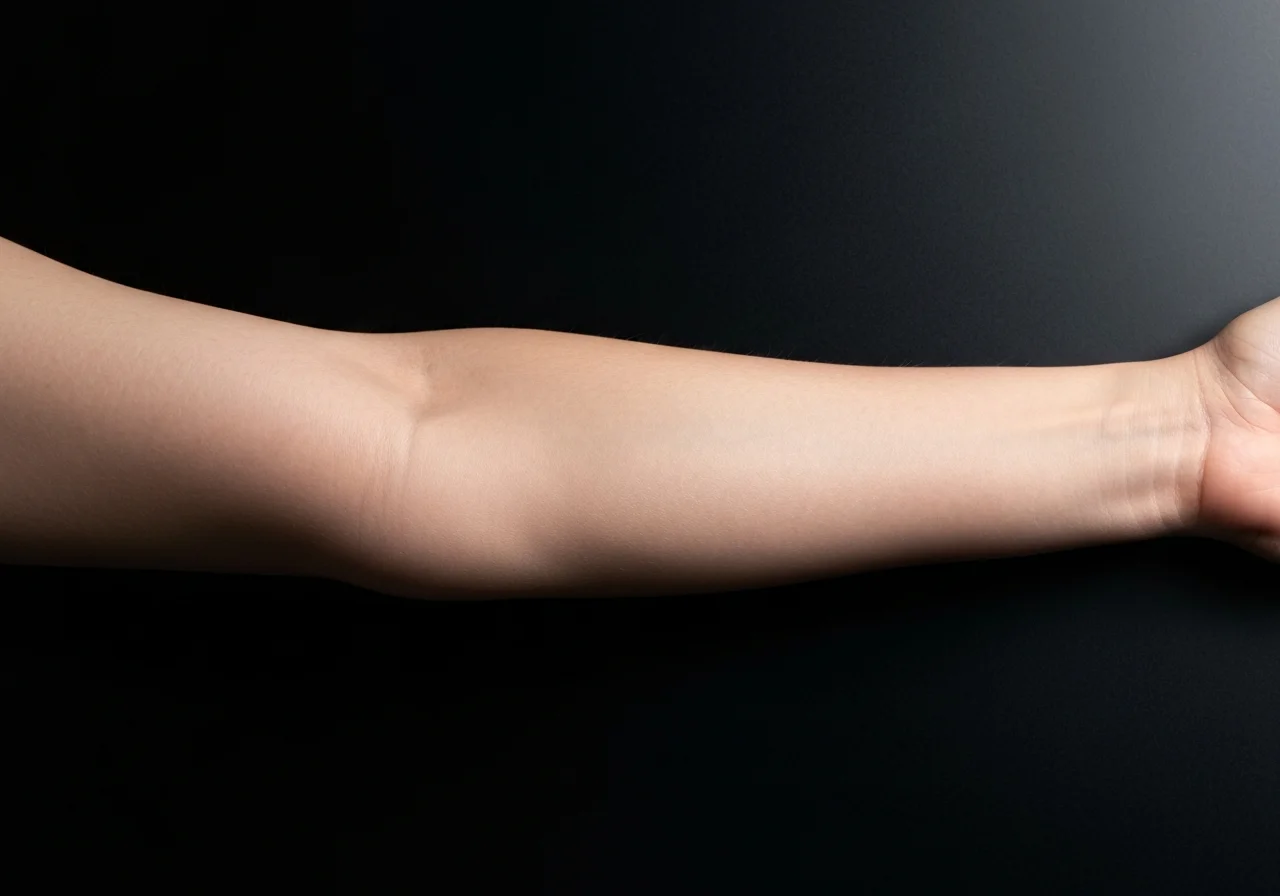
Outer Forearm: The Goldilocks Placement
This is where most successful first tattoos live. It’s not an accident.
The outer forearm gives you flat, stable surface area. The skin here heals predictably — not too thin, not too thick. You can see your tattoo easily (just glance down), but it’s not in everyone’s face. You can cover it with long sleeves for formal settings or roll them up to show it off. The aging properties are solid — it’s not sun-exposed constantly, but it’s not hidden away either.
Pain-wise, it sits in the middle. Not painful like ribs or shins, but not painless like your thigh. Most first-timers describe it as “manageable.”
The only real consideration: it’s visible during any video call, any handshake, any moment you’re in short sleeves. If you’re not ready to casually disclose that you have a tattoo, the outer forearm announces it. But for most first-timers, that’s actually the point — you want to see it, and you want to be able to show it.
Upper Arm: Maximum Control, Minimum Risk
The outer upper arm is the stealth version of the forearm — equally flat, equally stable, with even better control over who sees it and when.
Wear a t-shirt and it’s visible. Wear a light long-sleeve and it disappears. This placement gives you optionality without awkwardness. The skin here ages incredibly well — the upper arm doesn’t move much, doesn’t get heavy sun exposure, and holds detail longer than almost anywhere else on your body.
The pain is minimal. Healing is clean. If your tattoo is medium-sized (3-6 inches), this is the most forgiving placement you can pick.
The consideration: if you want constant access to see your tattoo, you have to be intentional about sleeve choice. For some people that’s freedom. For others it’s frustrating.
Calf: The Underrated Option
People sleep on calves. They shouldn’t.
Calves are genuinely ideal first-tattoo real estate — flat enough to support clean healing, covered enough to give you privacy when you want it (full-length pants or jeans), and visible enough that you can check it out in shorts or when you’re in the ocean. The aging properties are excellent. The pain is low-to-moderate — similar to the forearm.
The design reads clearly without body contour distortion (unlike wrists or shoulders). And there’s something psychologically nice about a placement you can keep semi-private while still enjoying it regularly.
Why doesn’t everyone choose calves? Partly because forearms are the Instagram default, partly because calves require shorts to show off, partly because people underestimate how satisfying it is to have a tattoo that’s just for you.
For first tattoos specifically, calves solve the biggest anxiety: they let you ease into being tattooed without broadcasting it before you’re sure you like it.
Skip These Placements for Your First
Hands and Fingers: The Fast-Fade Problem
Finger tattoos are beautiful for about six months. Then they start looking like pencil smudges.
The skin on your hands moves constantly. You use your hands constantly. They’re exposed to more sun and friction than almost any other body part — and UV light is one of the primary drivers of ink fading, according to the American Academy of Dermatology. Even bold, well-executed hand tattoos require touch-ups within a year or two. Fine line hand tattoos start blurring within months.
For a first tattoo, this is a morale killer. You wanted to see it age beautifully. Instead you’re watching it fade and needing to book a touch-up appointment nine months in. That ruins the “I made a good permanent decision” feeling.
Save hands for your second or third tattoo, when you already know you love being tattooed. By then, the cost of touch-ups is just part of maintaining ink you’re committed to. If you’re not sure you’re at that stage yet, these signs of readiness are worth working through first.
Wrist and Inner Forearm: The Visibility Trap
High-visibility placements feel exciting in the moment and complicated over time.
Inner wrist and inner forearm are intimate, exposed areas. You see them constantly. Everyone else sees them constantly — your tattoo becomes a conversation starter by default. That’s fine when you want it to be. It’s less fine when you’re in a job interview, a formal work event, or a family dinner where someone notices before you’re ready to talk about it.
Wrists also have a secondary problem: they curve. Designs that look flat when you’re designing them wrap around your wrist’s contour. Straight lines converge. Symmetrical shapes tilt. Lettering compresses. This isn’t your artist’s fault — it’s physics. But it means your vision and the actual result have a gap. For a full breakdown of how wrist placement behaves — inner vs. outer differences, fading rates, and the designs that actually hold — see the wrist tattoo placement guide.
For your first tattoo, pick a placement where the design reads the way you intended it to.
Face, Neck, and Behind-the-Ear: The Life Complication
These placements are visible in every professional interaction, every first impression, every family photo.
That’s not inherently bad. But on a first tattoo, it’s risk you don’t need to take. You’re still learning whether you like being tattooed. You don’t know if this design will age the way you imagined. You don’t know your pain tolerance for real. High-visibility placements force commitment before you’ve even confirmed you want to be the kind of person who gets visible tattoos.
The data backs this up: in the same PMC study, face tattoos carried a 44.1% regret rate — the highest of any placement tracked. Upper extremities (arms, wrists, hands) came in at 29.3%. The more visible the placement, the higher the regret. That’s a consistent pattern, not an outlier.
Save statement placements for later when you’ve proved to yourself that you love permanent ink.
Feet and Toes: The Durability Disaster
Feet are in constant contact with surfaces, constant pressure, constant friction. The sole is the most extreme case: skin there replenishes so aggressively that it pushes ink out — tattoos on the plantar surface typically fade into near-illegibility within 6–18 months, and a lot of artists refuse to do them at all precisely because they can’t stand behind the result. The top of the foot is better, but not by much.
Foot tattoos fade and blur faster than almost any other placement. You’ll be investing in touch-ups constantly. And because feet are easy to forget about, you might not notice until the detail is already gone.
For a first tattoo, durability matters psychologically. You want to feel like you made a good choice that’s going to hold up. Feet undermine that. If you’re set on a foot placement despite all of this, the foot tattoo placement guide covers which spots on the foot hold up best and how to give a foot tattoo its best chance.
Test Your Placement Before You Commit
Once you’ve narrowed it to forearm, upper arm, or calf, do this: use TattThat to preview your design in that exact spot.
Upload a photo of your placement area. Add your design. Drag, rotate, and resize until it’s positioned exactly where you’d want the real tattoo. Tip your arm in different directions. See how it looks in different lighting. Check how the design’s proportions work with your actual body.
This changes everything. Most people discover that their placement choice feels different once they see it for real. Sometimes they realize the spot is perfect. Sometimes they see an issue they hadn’t considered and adjust before booking.
You get two free previews. Use them for this. This is the one step that separates people who feel confident about their placement decision from people who have lingering doubts walking into the appointment.
The Decision That Pays Dividends
If you’re still working through what design to get, consider that designs with personal meaning consistently outlast those chosen for aesthetics alone. Birth flower tattoos are one of the simplest ways to land on a design with that anchor built in — the month you were born already made the choice.
Your placement choice on your first tattoo echoes forward. A good first tattoo builds momentum. It heals well, ages well, sits somewhere you can enjoy it, and proves to you that you made the right call.
A bad first placement creates friction that can make you hesitant about ever getting another one.
The good news: the ideal placements are the ones that are easiest to access, easiest to heal, and easiest to live with long-term. Forearm, upper arm, calf. They’re popular for a reason.
When you’re ready to book, run one preview in TattThat to confirm the placement reads the way you’re imagining. Then book with confidence knowing you’ve made the choice that sets up your first tattoo for success.
See It on Your Skin Before You Commit
Upload a photo, pick a design, and see exactly how it'll look — in seconds. 2 free previews, no card required.
Try TattThat Free →