
Picture yourself a year from now — sleeve rolled up, glancing at your forearm. Not anxiously. Just casually, the way you check a watch. The design is there, it looks exactly right, and the only feeling it gives you is a quiet satisfaction that you finally did it.
That’s the version of you that made a good decision. The question isn’t whether you’ll get a tattoo — it’s whether you’re at the point where that future version is the likely outcome.
Most of the internet will tell you to “make sure you’re really ready” and leave it at that. What actually distinguishes ready from not-ready is more specific than that. Here are the signs that matter.
You’ve Had the Same Idea for Months — and It Still Feels Right
This is the single most reliable signal. An idea that persists through different moods, different seasons, different versions of yourself is an idea that belongs to you.
Research backs this up directly: people who sat with a tattoo idea for several months before booking have roughly a 10% regret rate. Spontaneous decisions — same-day walk-ins, impulse bookings — carry a 48% regret rate. The gap isn’t about age or taste. It’s about time.
Six months is a useful threshold. Not because six months is magic, but because by then you’ve revisited the idea on good days and bad ones. You’ve had moments where you thought “maybe not” and came back around. The ones that survive that test tend to stick.
If you decided you wanted it this week, that’s not a no. It’s a “wait and check back.”
You Can Describe It Without Reaching for Your Phone
Close your eyes. Describe your tattoo out loud — style, size, main visual elements. If you can do that in two sentences without opening Pinterest or your saved images folder, you own that idea. It’s yours.
People who arrive at a consultation with a vague “something like this but different” end up with designs they didn’t fully choose. The artist fills the gaps. Sometimes that works. Often it doesn’t — and that’s one of the most common reasons tattoo regret happens.
Being ready doesn’t mean having every detail locked. It means having a clear enough picture that you could guide someone toward it. That clarity is its own form of commitment. If you’re still sorting out which style fits the design you have in mind, the tattoo style guide walks through the major styles and the constraints — placement, skin tone, aging — that actually determine which one is right for you.
You Know Exactly Where It Goes — and Why
“I want a tattoo” and “I want this tattoo on my inner forearm, roughly palm-sized” are two different levels of readiness.
Placement affects everything: how the design reads, how visible it is at work, how it’ll hold up over time, how much it’ll hurt. People who think about placement before they book make better decisions than people who decide in the chair.
41% of tattoo regret traces directly back to placement dissatisfaction. That’s not design regret or style regret — that’s “I wish I’d put it somewhere else.” It’s one of the most preventable kinds of regret there is.
If you’re still thinking “somewhere on my arm, maybe,” you’re not quite there. When you have a specific spot and a reason for it, you’re ready. If you’re still working it out, the tattoo placement guide walks through every major placement — visibility tradeoffs, aging, pain, and how body contour affects the design.

You Want It for You — Not for the Reaction
There’s a version of wanting a tattoo that’s really about wanting the image of having one. Wanting to look edgy, or interesting, or like you’ve done something bold. That’s not nothing — aesthetics matter — but if the wanting is mostly about what other people will think, that’s a shaky foundation.
Peer pressure is statistically significant here: people who got tattooed partly due to social pressure have 3x higher odds of regret. That’s not a small effect. It’s peer pressure correlating with regret at roughly the same rate as getting tattooed under the influence.
The clearest way to check this: if nobody in your life ever saw the tattoo, would you still want it? If the answer is yes, you’re good.
You’ve Thought About Who You’ll Be in Ten Years
This is the one most people skip. You’re not just thinking about whether you’ll love the design next month. You’re trying to picture a version of yourself a decade out — what job might you have, what does your relationship to your body look like, what meaning will this carry?
Some things change. The script of your ex’s name. The logo of a brand you used to love. The in-joke that required explanation. Other things don’t: a design that reflects something true about you now and likely still true later — a value, a relationship, a way you see the world.
That future-self test isn’t about anxiety. It’s about taking the permanence seriously enough to make a decision you’ll respect. Most regret is slow-onset — it builds over years, not overnight. Thinking ahead is how you avoid it.
You’ve Actually Seen It on Your Body
This one is the most underrated sign. Not on someone else’s arm in an Instagram post. On your actual skin, in the actual spot, at the scale you’re imagining.
There’s a real gap between picturing something and seeing it placed on you. The proportions change. The spot looks different in different lighting, with different clothing. What looked right in your head sometimes needs adjusting once it’s in context.
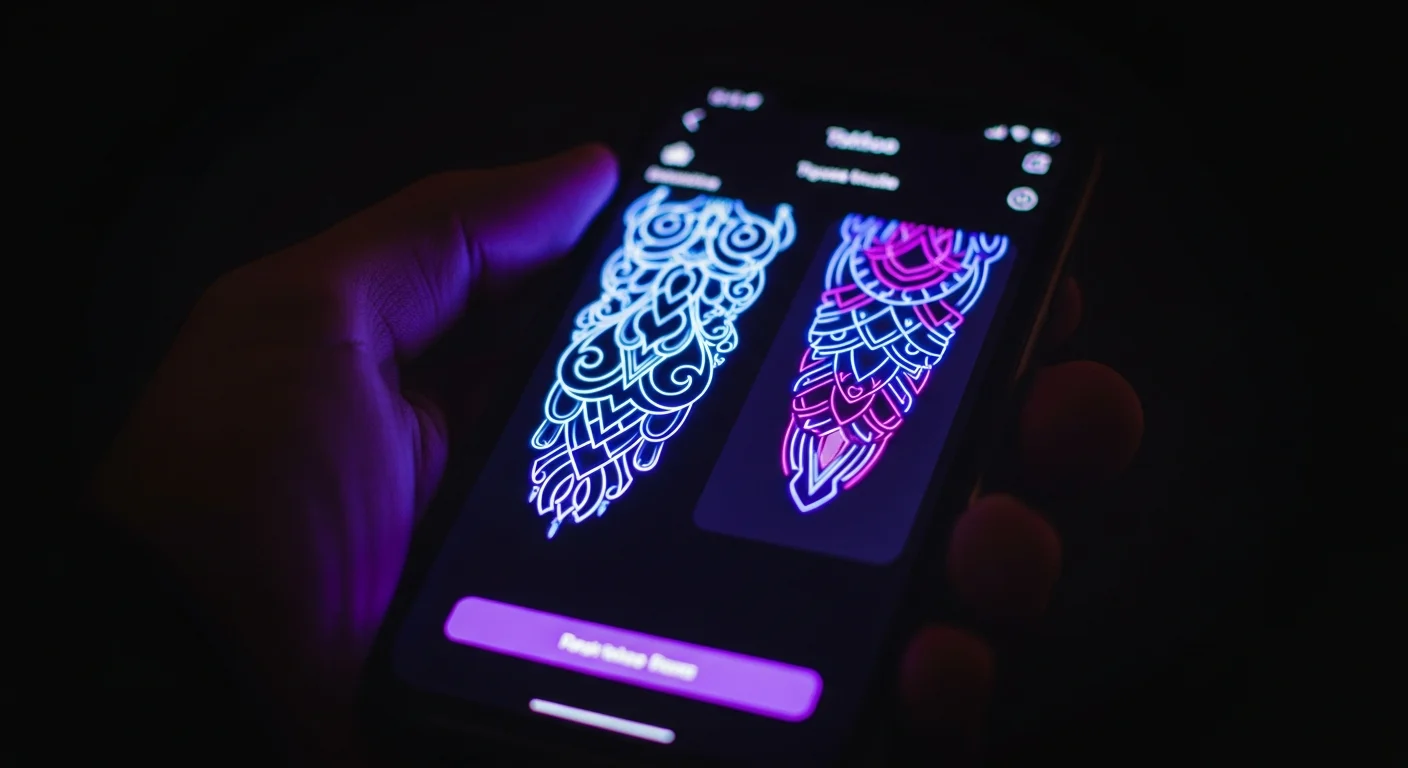
Before you book, use TattThat to run a preview on an actual photo of yourself. Upload a picture of the placement area, overlay the design, move and scale it until it’s where you’d want it. Two free previews, no card required.
If you see it on your skin and the feeling is “yes, exactly that” — you’re ready. If something feels off, better to know before you’re in the chair.
What “Ready” Actually Means
It doesn’t mean zero nerves. Nerves about the needle, about the pain, about whether the artist will nail it — that’s normal. That kind of nervousness passes the second you’re in the chair.
What you’re looking for is the absence of the other kind: the low-level uncertainty that something about the decision itself isn’t right yet. If you’ve worked through the signs above, that uncertainty should be gone. What’s left is just anticipation.
That’s the version of you that ends up looking at their arm a year from now with nothing but satisfaction.
If you’re not quite at all six yet, here’s what the research says about how long to actually think about a tattoo before your decision carries real weight.
See It on Your Skin Before You Commit
Upload a photo, pick a design, and see exactly how it'll look — in seconds. 2 free previews, no card required.
Try TattThat Free →