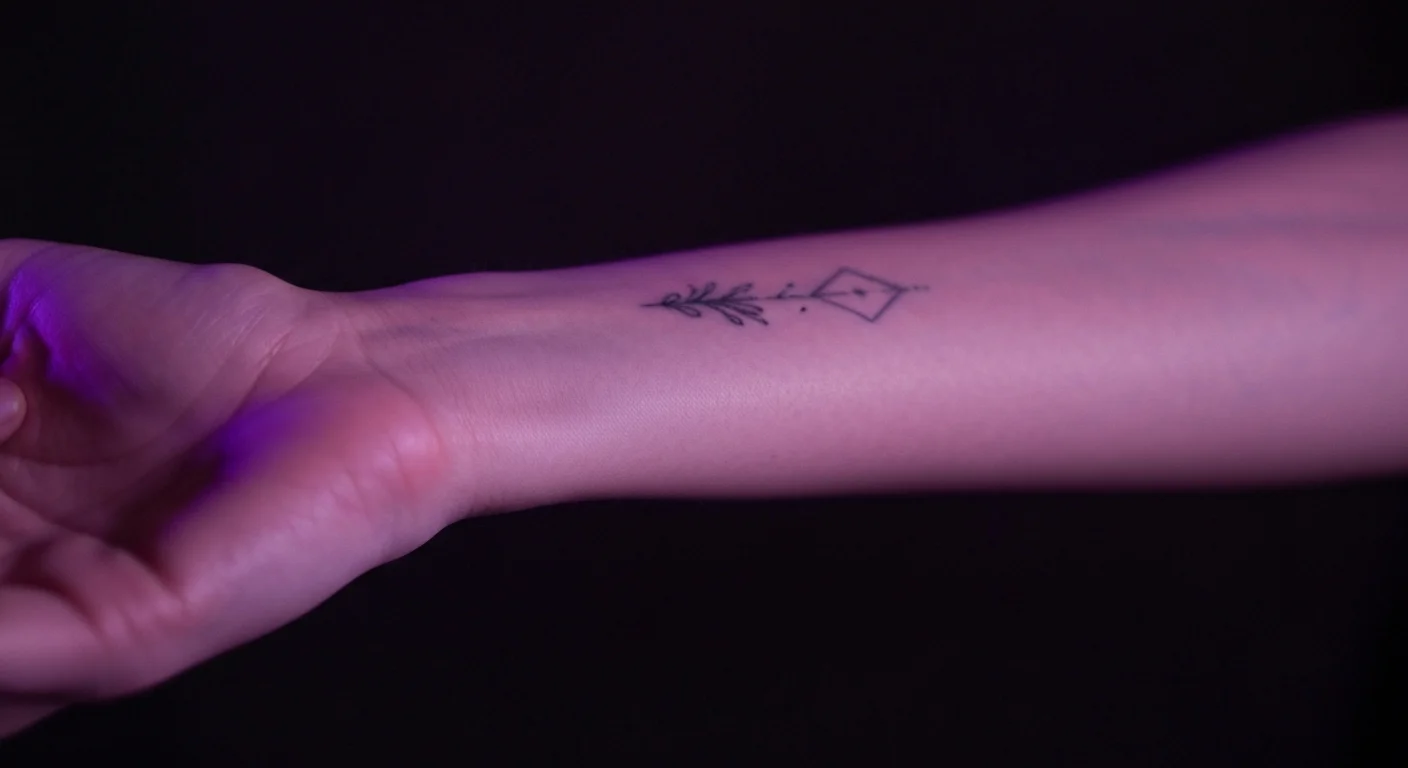
Is the wrist the right spot for what you’re imagining?
You’ve been picturing it there for weeks. The design scaled down, sitting right where you can see it without turning your arm. Every time you glance down it’ll be there — a permanent reminder of whatever this tattoo means to you. The placement feels personal in a way that outer forearm or upper arm doesn’t. It belongs to the inside of your life, not the outside.
But the wrist comes with things no one mentions until after you’ve booked. The curve that distorts designs. The sun exposure that runs through your day without you noticing. The fading rate that surprises most people within the first few years. And the visibility that makes it one of the most public intimate placements on your body.
The direct answer: the wrist is a solid placement for the right design — compact, simple, clean-lined work that fits the canvas. It’s not ideal for complex compositions that need straight lines or precise spacing. Choosing the wrist also means accepting its maintenance demands: sunscreen consistently, touch-ups eventually, and a design appropriately sized for the actual space. Get those three things right and the wrist is one of the most satisfying placements you can pick.
The Wrist Is Always Visible — That’s the Point (and the Risk)
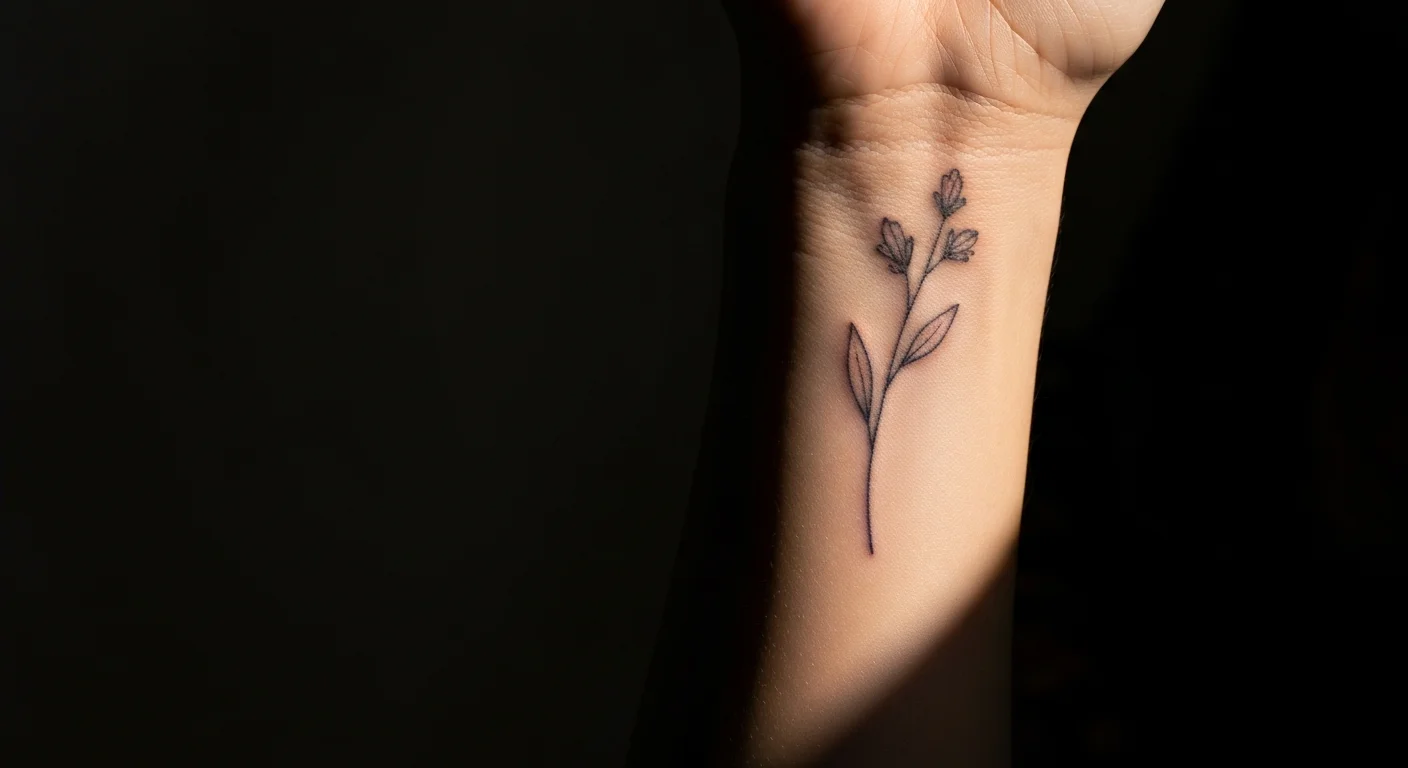
The wrist is one of the few placements where every short-sleeve context means your tattoo is showing. Not upper-arm visible, where you can angle your body to conceal it. Wrist visible — present in every handshake, every keyboard position, every moment you extend your arm across a table.
That permanence of visibility is exactly what draws people to it. You’re not hiding this. You’re not choosing a placement that requires effort to show off. It’s just there.
But that same equation can go wrong in specific contexts. AARP’s body modification research found roughly 25% of tattooed adults have covered their ink for workplace or professional settings at some point — and wrist tattoos are among the hardest placements to conceal without a long sleeve or a watch. If you’re navigating a professional environment where visible tattoos still create friction, the wrist creates a daily coverage consideration that higher placements don’t.
That’s not a reason to avoid the wrist. It’s a reason to be honest with yourself about your daily context before you book. For a broader overview of how placement visibility affects long-term satisfaction, the tattoo placement guide covers the full spectrum from low-visibility to statement placements and the regret patterns that go with each.
Inner vs. Outer Wrist — Two Very Different Relationships with Your Skin
The inner and outer wrist behave differently in nearly every dimension that matters for tattoo longevity.
Inner wrist is the intimate side. You see it when your arm is at rest, when you’re typing, when you’re holding a coffee cup. It faces you more than it faces the room. The skin here is thin — thinner than almost anywhere else on the arm — with veins and tendons sitting close to the surface. It’s the more personal version of wrist placement, and genuinely the more painful one.
Outer wrist faces the world when your arm hangs naturally. The skin is slightly thicker and sits over more stable structure. Pain is more manageable. It reads as a more declarative placement — this tattoo presents itself without you having to extend your arm.
Both sides curve. That’s the universal wrist constraint. Anything that depends on straight horizontal lines — text, symmetrical geometry, consistent spacing across the design — will follow the contour of your wrist as it moves. An experienced wrist artist knows how to compensate during execution, but the physics aren’t fully avoidable. Smaller, simpler designs sidestep this far better than complex ones.
The inner-vs.-outer choice is ultimately about whose relationship with the tattoo matters more to you: yours or other people’s. Neither is wrong. They’re just different orientations.
Wrist Tattoos Fade Faster Than You’re Expecting
This is the thing that gets mentioned at consultation and forgotten by the time the tattoo heals.
The wrist is in near-constant motion — flexion, extension, rotation, hundreds of times a day. That movement stresses the dermis layer where ink lives, causing micro-disruption over time that accelerates fading and edge softening. At the same time, the wrist catches a significant amount of sun. When your arm rests on a desk or hangs at your side outdoors, the outer wrist surface is in direct light. UV radiation is one of the primary drivers of premature tattoo fading, breaking down ink pigments — especially in colored and fine-line work — faster than placements on protected skin.
What that means in practice: a wrist tattoo in solid black will hold definition longer than a hairline wrist tattoo. Any wrist tattoo will age faster than the same design on your upper arm or calf, where movement is lower and sun exposure is more controllable.
Consistent sunscreen on the placement substantially slows that process — but it’s non-negotiable maintenance here, not a nice-to-have. If you won’t reliably protect the placement, weight your design choice accordingly. A bold, simple piece will still look intentional after a decade. A finely detailed wrist design without sun protection will start looking blurry around year two or three.
The Designs That Work on Wrists (and the Ones That Fight the Canvas)
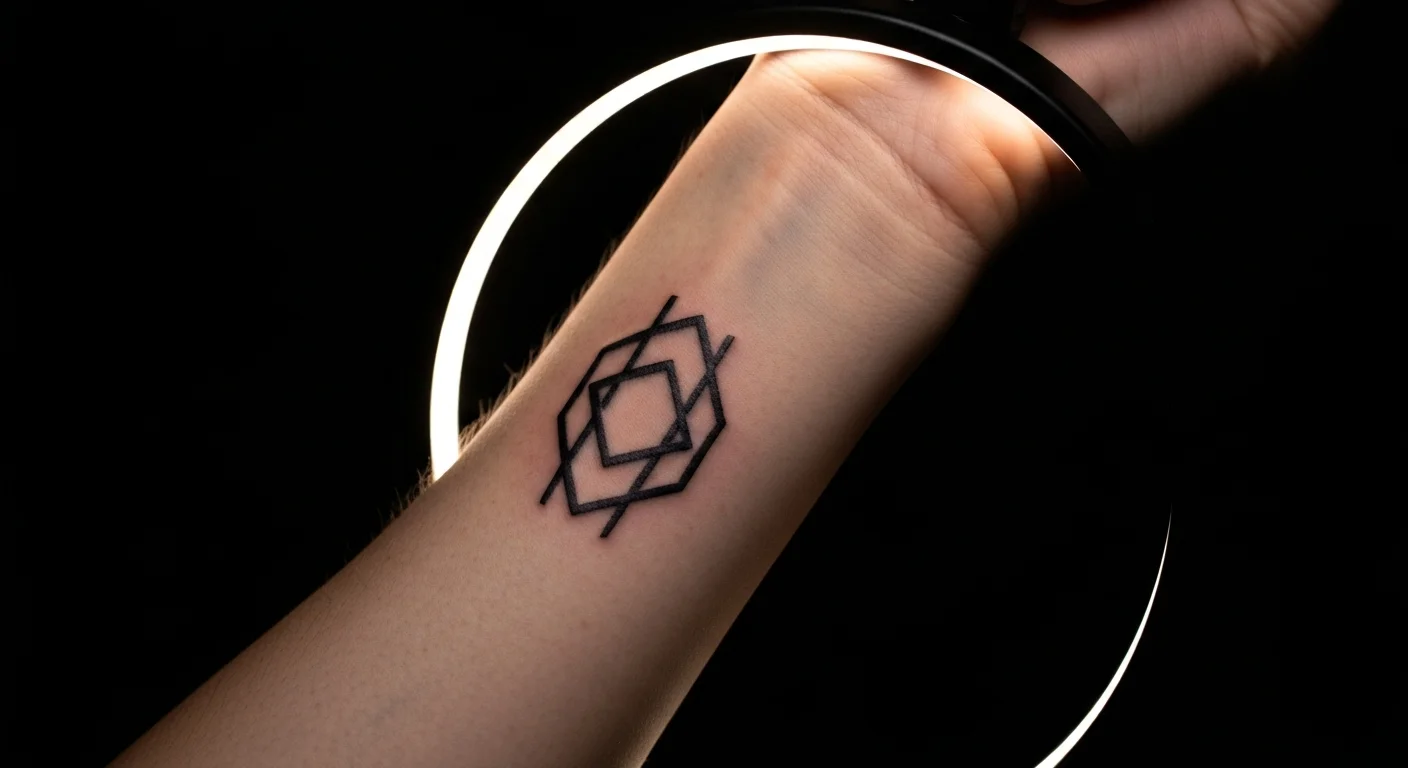
The wrist is a compact, curved canvas. The designs that succeed here are almost always ones that work with the constraints rather than against them.
What works well:
- Single botanical elements — a branch, a simple flower, a stem
- Geometric symbols that read clearly at small scale
- Short text in clean, readable fonts (keep font size generous — thin lettering blurs at wrist scale)
- Small portraits with strong black contrast
- Minimalist linework that doesn’t depend on symmetry to land
What fights the canvas:
- Multi-element compositions with consistent spacing requirements
- Text with multiple lines (curvature compresses vertical spacing)
- Designs that need to “wrap” seamlessly around the full circumference
- Complex fine detail requiring uniform skin texture — wrist skin varies noticeably between inner and outer surfaces
Scale matters more here than on any other arm placement. A design that reads clearly at 3 inches on a reference sheet may need to be simplified to 1.5 inches to actually work on your wrist. Your artist can advise on this, but going in with a design already sized appropriately for the space gives the session a better starting point. For comparison on how designs scale across arm placements, the forearm tattoo placement guide is useful context — particularly for understanding how a design changes character depending on inner vs. outer orientation.
Test Your Wrist Design Before You Book
The fastest way to resolve wrist placement uncertainty is to see your specific design on your actual wrist before committing to it.
Use TattThat to upload a photo of your wrist and preview your design directly on your skin. Try the inner surface, then the outer. Scale the design up and down to find the size that fits the canvas without crowding it. The curvature you’re worried about becomes visible in the preview — you’ll see immediately whether your design reads cleanly or whether it needs simplification before the needle touches skin.
The wrist is exactly that kind of placement: you’ll see this every single day without trying. Research on tattoo placement and regret consistently finds that upper extremity placements — including the wrist — carry higher regret rates than lower extremity or torso placements, largely because the daily visibility creates expectations people didn’t fully account for before booking. A preview on your actual wrist, in your proportions, at your chosen scale, is the one step that tells you whether the design you’ve been imagining actually works in the spot you’ve chosen for it.
If it looks right in the preview, book with confidence. If something feels off — the size, the position, the orientation — you can adjust before you’re committed to permanent ink.
See It on Your Skin Before You Commit
Upload a photo, pick a design, and see exactly how it'll look — in seconds. 2 free previews, no card required.
Try TattThat Free →