
The outer forearm shows up in every beginner tattoo guide. Artists recommend it constantly. It’s the default.
What doesn’t get said: inner vs. outer isn’t just an aesthetic preference. It’s a decision that changes how visible your tattoo is to you versus the world, how much sun it gets every day you’re outside, how the session feels, and whether your design reads the way you imagined it. Most people choose with half the information — they pick based on what they’ve seen on Instagram and hope it translates.
Here’s what each side actually means.
The direct answer: outer forearm is more world-facing, better suited for bold designs, and slightly less painful. Inner forearm is personal-facing, better for fine line and text, and more intentional in its aesthetic. Neither is wrong — they suit different designs and different reasons for getting tattooed. The choice should follow your design and your intention, not convention.
The Core Difference Isn’t Aesthetic — It’s Geometry
Your outer forearm faces the world when your arms hang at your sides. Your inner forearm faces you. That’s the whole geometry — and it has real downstream effects.
Sun exposure: When you walk outside with your arms relaxed, the outer forearm gets direct sun. The inner surface faces your body. UV radiation is the primary driver of ink breakdown over time — colors shift, fine lines lose definition, and contrast flattens. This isn’t a dealbreaker for outer placement, but it does mean sunscreen on your tattoo becomes a non-optional maintenance habit if you choose that side. The AAD recommends SPF 30+ on tattooed skin every two hours of sun exposure — outer forearm is one of the placements where that advice matters most, given how much direct sun it catches on an average day.
What you see every day: Your inner forearm faces you when you type, hold a drink, or rest your arms on a desk. It’s private-facing. Your outer forearm faces other people — coworkers see it in meetings, strangers see it when you reach across a table. The experience of living with the tattoo is genuinely different depending on which side you pick. Some people want a constant personal reminder. Others want to share it with the world. Both are valid. They’re just different relationships with the ink.
Skin structure: The inner forearm has thinner skin, more visible veins, and less muscle buffer — particularly as you move toward the wrist. Outer forearm sits over the extensor muscles, which cushions the session noticeably. Both are rated mild-to-moderate on most pain scales. But inner forearm runs slightly higher in sensitivity, especially in the lower third near the wrist.
Outer Forearm: Why It Earned the Default Spot
The outer forearm became the standard recommendation because it solves most problems at once.
The surface is flat, stable, and sits over enough muscle to heal predictably. The skin doesn’t thin out or curve dramatically — designs read cleanly without the distortion you get on the wrist or shoulder. It’s visible in short sleeves and fully coverable in long ones. You don’t have to think about it.
It’s also the right home for certain design types:
Bold traditional and neo-traditional work is built to be seen. The world-facing orientation of the outer forearm matches the intention of the style — you lead with the art. Saturated colors and heavy outlines hold up particularly well here because the skin’s relative stability during healing supports clean ink saturation.
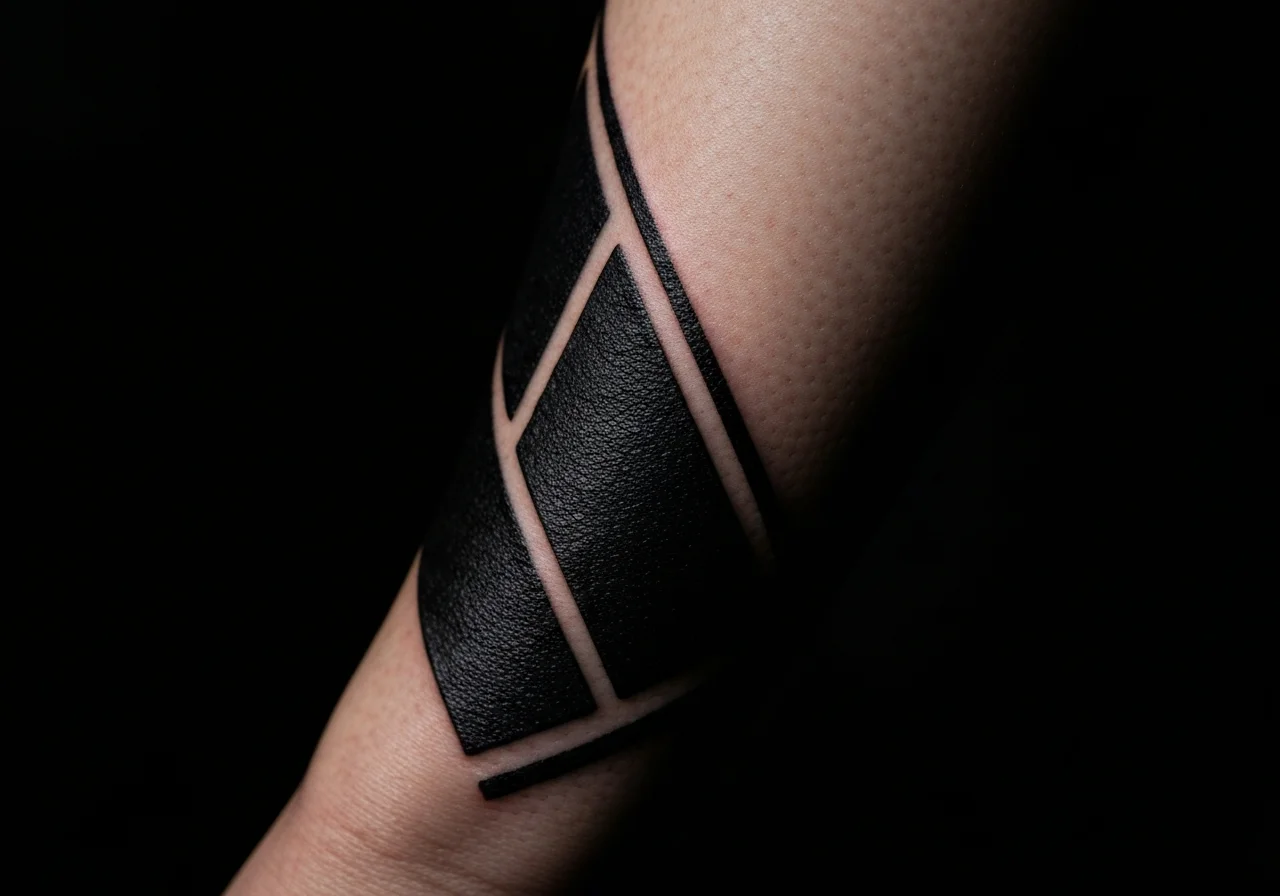
Geometric and blackwork designs need a stable, flat surface. Precision work that relies on straight lines and symmetry risks distortion on curved surfaces like the shoulder or wrist. The outer forearm gives you the flattest, most consistent canvas on the arm.
Portraits and detailed realism benefit from the structural stability and your artist’s clean access to the whole canvas. These designs require controlled ink saturation and consistent skin response — outer forearm delivers both.
The tradeoff is permanent visibility. Your outer forearm is in frame whenever you’re in short sleeves — video calls, job interviews, first handshakes. That’s fine if you’ve decided you’re comfortable being visibly tattooed. But if you’re still calibrating that, it’s worth sitting with before you book. Placement regret — meaning loving the design but wishing it was somewhere else — accounts for nearly 41% of tattoo regret overall. The outer forearm’s public-facing quality is the most common surprise people don’t anticipate.
Inner Forearm: The Intentional Choice
The inner forearm is where people put designs that mean something specifically to them.
That follows from the geometry again. You see it when you’re alone, when you’re sitting quietly, when you’re at rest. It doesn’t announce itself to strangers unless you extend your arm. People who want their tattoo to be personally meaningful — something that belongs to them, not a public statement — gravitate here naturally.
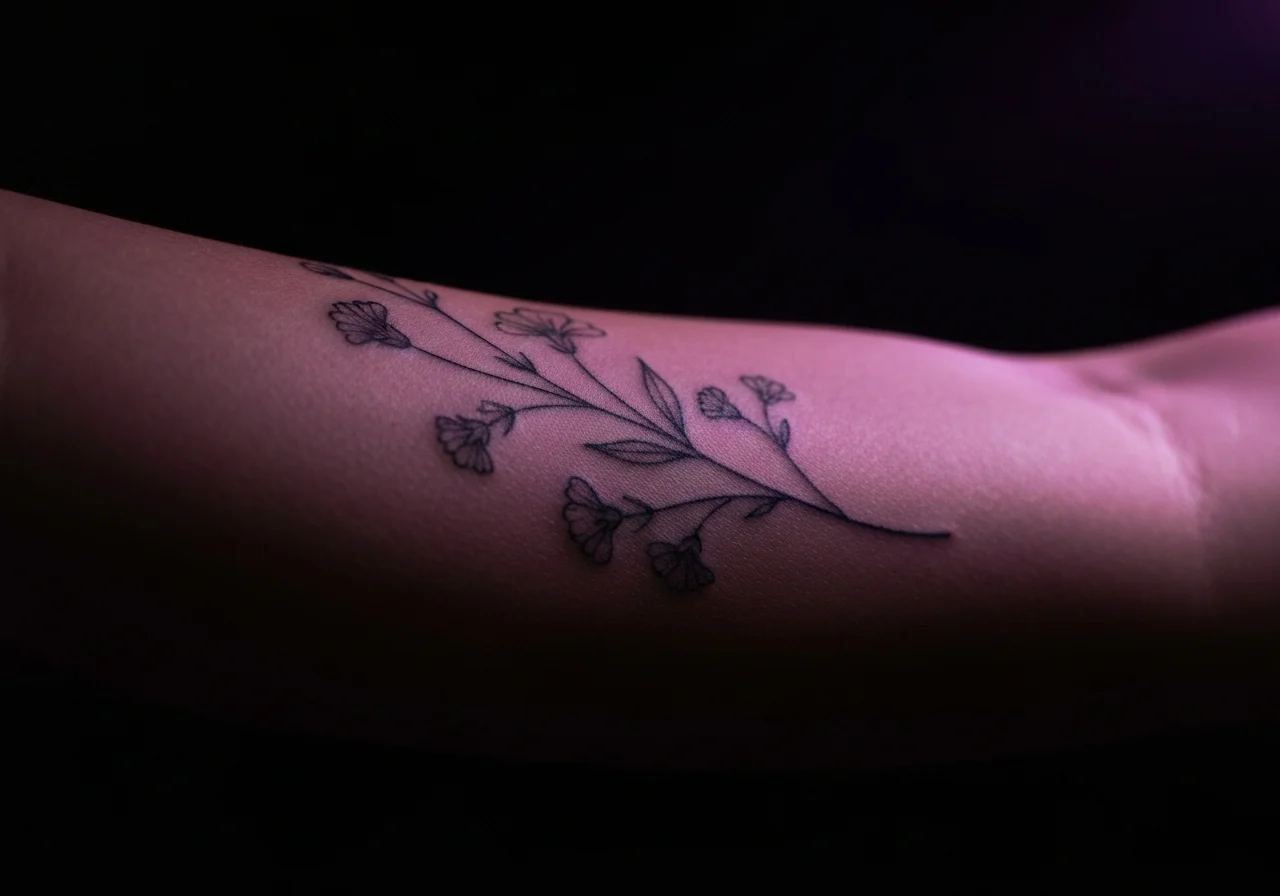
Fine line botanical work and delicate linework suit inner forearm well. The slightly softer skin quality and personal-facing orientation match the aesthetic — intricate, considered, private. The vertical orientation also gives flowing designs natural room to stretch.
Long text and quotes almost always work better here for practical reasons. The forearm’s length provides the runway a phrase needs, and the natural reading position is exactly right — you see it when your arm is at rest, in the orientation it was designed to be read.
One real consideration: inner forearm near the wrist is not a hidden placement. When your arm is extended in short sleeves, it’s fully visible. If workplace visibility matters to you, keep the design toward the middle of the forearm rather than close to the wrist. That small adjustment changes the social calculus considerably.
Healing on the inner forearm is generally clean. Cleveland Clinic dermatologists recommend keeping the tattoo moisturized, out of direct sun, and away from submersion for the first several weeks — advice that applies to any placement but matters slightly more for inner forearm given the thinner skin.
What Your Design Is Actually Asking For
The cleanest framework: let the design make the call.
Choose outer forearm if your design is: bold, geometric, traditional, portrait-based, or intended to be a public presence. Anything you want the world to see naturally when you reach for something or roll up your sleeves.
Choose inner forearm if your design is: fine line, text-based, botanical, personal, or intimate. Anything whose meaning matters more to you than to anyone watching.
Size as a factor: Large designs (5”+) work on either side with adjustments. Small designs (under 2”) read better on inner forearm where they stay proportional and personal — outer forearm can make small designs look stranded on the canvas.
Skin tone and design contrast: High-contrast blackwork shows strongly on both sides. Fine line work with lower contrast benefits from the inner forearm’s slightly smoother skin texture, which tends to hold hairline detail cleanly when healed correctly.
Ipsos research shows 92% of tattooed Americans are happy with their ink — the vast majority land in the right place. The ones who don’t almost always skipped the step of actually seeing the design where they planned to put it, trusting a reference photo from someone else’s body instead of their own.
See Both Sides Before You Commit
The fastest way to resolve an inner-vs.-outer debate is to see both options on your actual arm.
TattThat lets you do exactly that. Shoot a photo of your outer forearm. Preview your design. Then flip your arm, shoot the inner surface, and preview it there too. Drag and resize until the position looks right on each side. Then compare — not in the abstract, but on your body, in your proportions, with your skin.
Most people can feel the difference immediately when they see it for real. The design that felt like it belonged on the outer side sometimes makes more sense on the inner once you see it there. Or the opposite. Either way, you’re making the call with real information instead of a gut feeling based on references from someone else’s skin.
Two free previews. Use one for each side.
For a broader look at how the forearm compares to other placements across the body, the full tattoo placement guide covers every major zone.
See It on Your Skin Before You Commit
Upload a photo, pick a design, and see exactly how it'll look — in seconds. 2 free previews, no card required.
Try TattThat Free →