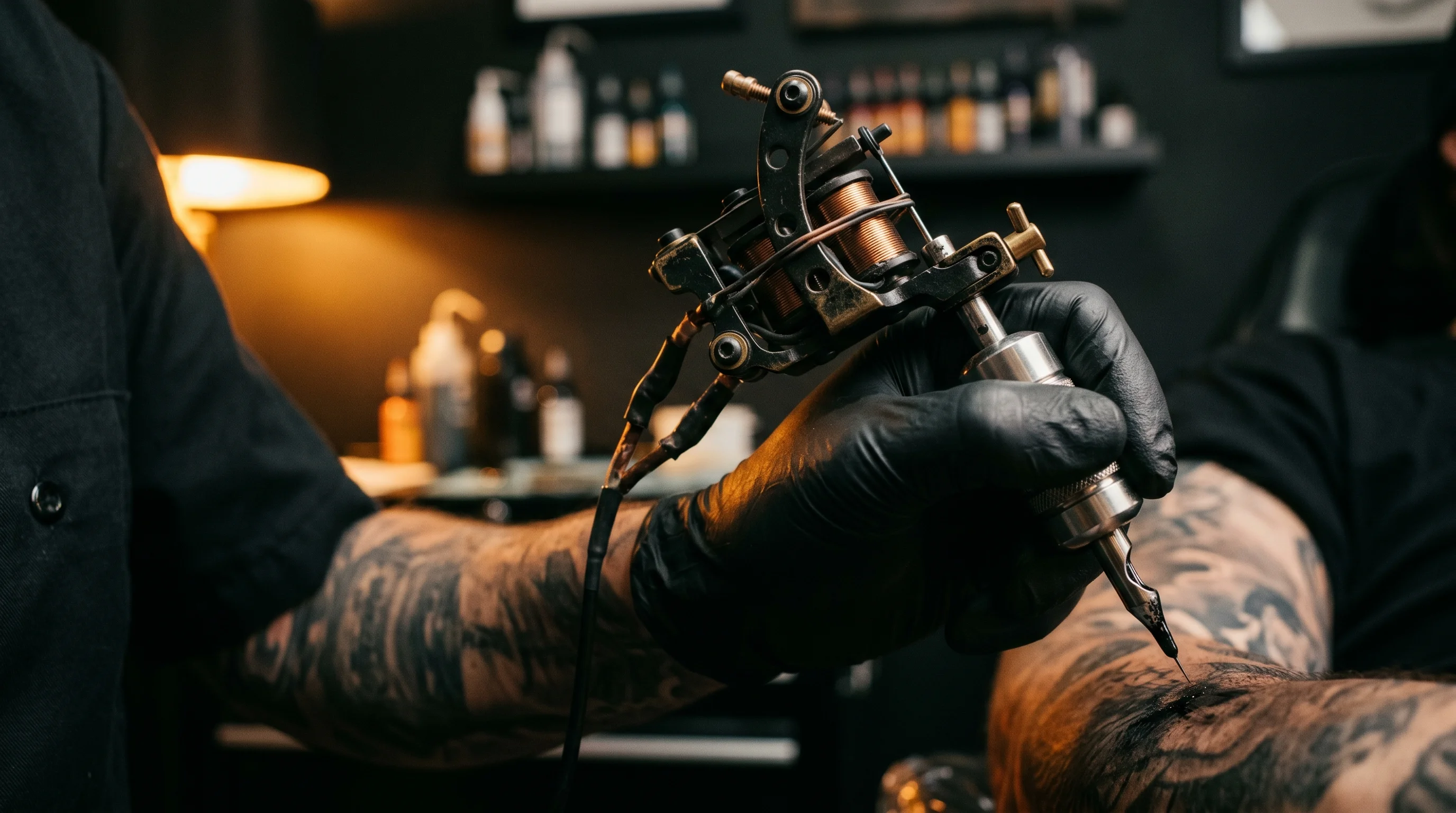
The fear of tattoo pain is almost always worse than the tattoo itself.
That’s not reassurance. It’s a documented pattern: people going into their first session expecting something close to agony and coming out surprised that it was workable. The anticipation of tattoo pain tends to amplify the expectation significantly past what most placements actually deliver.
The reframe isn’t “it doesn’t hurt.” It’s that the pain isn’t what you’re picturing. It’s not sharp, not jolting, not escalating the way an acute injury does. Understanding what the sensation actually is — and isn’t — is the most useful preparation for a first session.
The direct answer: Getting a tattoo feels like a sustained burning scratch. Continuous and present, not intermittent. Most intense in the first minutes before your adrenaline response engages, then typically more manageable. The placement determines the intensity more than anything else — outer arm and calf are genuinely moderate; ribs and spine are genuinely hard.
What the Machine Is Actually Doing
Understanding the mechanism changes how you experience it mentally.
Cleveland Clinic describes the process: tattoo needles puncture the skin thousands of times per minute, depositing ink into the dermis — the layer below the epidermis. It’s a controlled, rapid trauma to skin. Your body registers this as injury and responds accordingly — with inflammation, pain signals, and eventually healing.
The sensation you feel is the compound result of thousands of micro-punctures per minute. That’s why it feels like a scratch rather than a discrete stab — there’s no single moment of pain, just a continuous stream of signals that your nervous system processes as a sustained burning pressure.
That sustained quality is what surprises people. They expected something more like an injection — a sharp moment that passes. Instead it’s present for the duration. Once your body adjusts to it (usually within the first few minutes), most people find it less distressing than they anticipated.
How the Sensation Varies by Placement
Placement is the primary variable. Healthline’s pain breakdown groups placements usefully:
Low-to-moderate intensity: Outer upper arm, bicep, tricep, outer forearm, shoulders, upper back, outer thighs, calf. More fat and muscle between the needle and bone, fewer concentrated nerve clusters. Most people describe these as a persistent scratch they can tune out for short sessions. These are the recommended first placements for good reason.
Moderate-to-high intensity: Inner forearm, inner upper arm, back of the knee, lower back. Thinner skin, closer to nerves, less cushioning than the outer surfaces. Manageable but more present.
Genuinely challenging: Ribs, sternum, spine, inner elbow, shins, ankles, hands, feet, neck. Bone proximity creates a vibration-like component alongside the burning; nerve density is higher; there’s minimal padding to absorb. People with high pain tolerance in normal life often find these spots unexpectedly difficult. If you’re starting with a rib piece for your first tattoo, go in knowing this.
The outline phase is typically more intense than shading — the needle is creating the initial penetration rather than building on already-worked skin. Shading and fill passes over the same area often feel different (sometimes less intense, sometimes more depending on your skin’s response).
What Happens Over a Session
The first few minutes are almost always the hardest part.
Your nervous system doesn’t have context for the sensation yet. The adrenaline response hasn’t fully engaged. You’re paying close attention to every signal. This is when people are most likely to think: I’m not sure I can do this.
Then something shifts. For most people, around five to ten minutes in, the sensation becomes more familiar — your body has categorized it, your adrenaline is circulating, and the acuity softens. It’s still present, but it’s manageable in a way the first minute wasn’t.
Psychology Today notes that 10% of people cite fear of needles and pain as a reason they haven’t gotten a tattoo. For most of them, the reality of the session would be easier than the fear they’ve been carrying. The anticipation is the hardest part of most tattoos.
For longer sessions (three-plus hours), pain typically accumulates in the final stretch — the skin has been worked for a while and becomes more sensitized. This is normal and not a sign anything is wrong. It’s the moment to take a short break if you need one. Asking for five minutes is completely normal. Pushing through a genuinely difficult final hour when your body is done benefits no one.
The Day After
When the session ends, your artist cleans and wraps the area. For the rest of the day, the tattooed skin feels roughly like a moderate sunburn — warm, tender, a little puffy. This resolves over the next 48 to 72 hours.
Week one: mild tenderness, some redness, possibly minor swelling. Normal. The skin is healing.
Week two: itching and peeling as the outer layer sheds. This is where most people accidentally damage their tattoo by scratching or picking at peeling skin. Don’t. The itching is expected. Leave it alone.
By the end of week two, the surface is healed. The deeper layers take longer to fully settle — the colors may look slightly muted until the skin is fully healed at around four to six weeks.
The Anxiety You’re Actually Carrying
The fear of pain is real, but for most people, it’s not primarily about pain. It’s about the uncertainty of not knowing exactly what they’re walking into, combined with the weight of a permanent decision.
TattThat addresses the second part — the permanent decision piece. Upload a photo, place your design, and see exactly how the tattoo will look on your body before any appointment. Walking into the session with certainty about the design and placement reduces the ambient anxiety that amplifies pain perception. The clearer you are going in, the easier the experience tends to be.
For more on what the actual appointment looks like from start to finish — the stencil, the session, what your artist will tell you — the full first appointment guide covers every step. And for choosing a placement that’s appropriate for a first tattoo, the placement guide for first-timers has the full breakdown.
The sensation is one part of what first-timers want to understand. For the full pre-session picture — design, placement, artist, and aftercare — the first tattoo guide covers it all.
See It on Your Skin Before You Commit
Upload a photo, pick a design, and see exactly how it'll look — in seconds. 2 free previews, no card required.
Try TattThat Free →