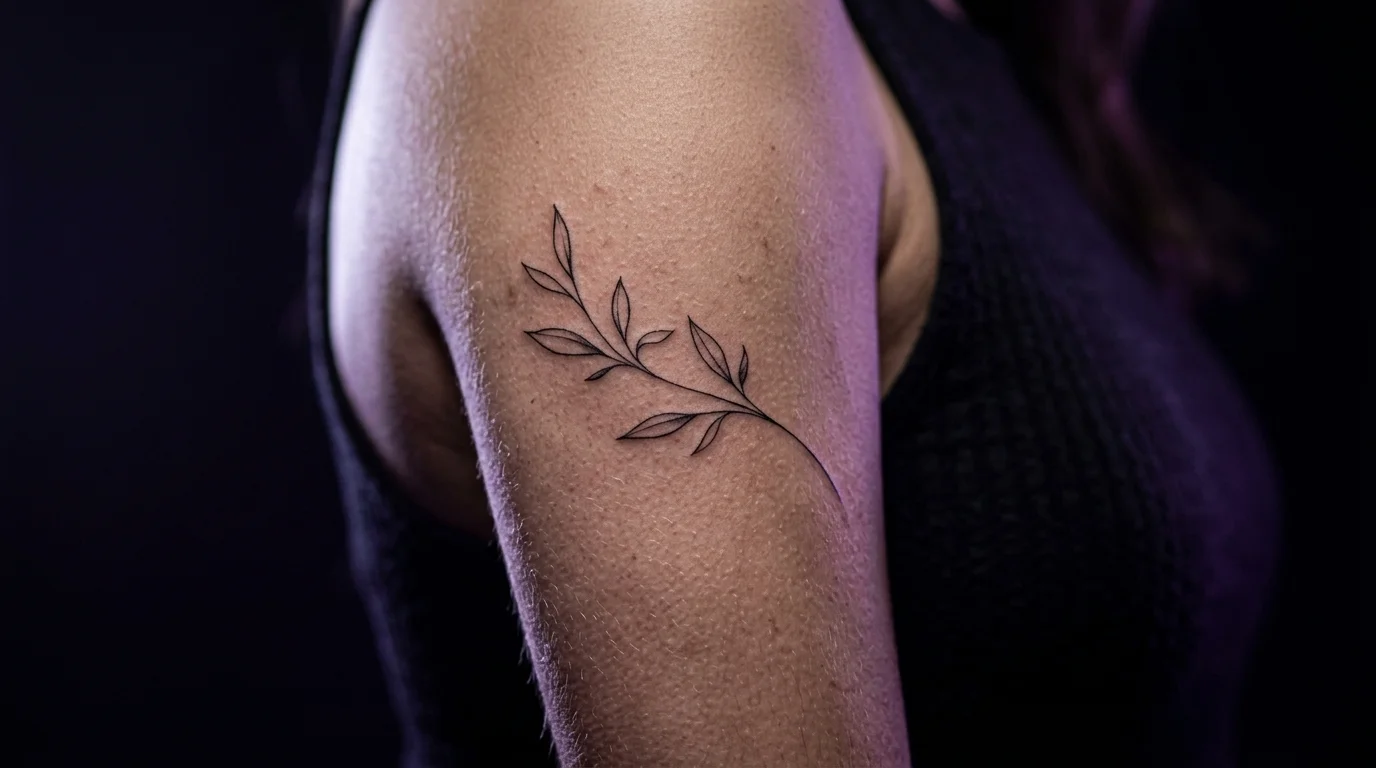
You’re looking at a fine line tattoo on someone’s wrist — delicate botanical lines, barely thicker than a hair, perfectly rendered. And the question that surfaces isn’t “should I get one.” It’s: “what does that look like in twenty years?”
That question is doing something specific. It’s not really about aesthetics twenty years from now. It’s about whether you’re making a decision you’ll regret — whether the thing that looks right today will look embarrassing or blurry or wrong when you’re older. It’s the gap between “I want this now” and “will I still love this later.”
The direct answer: Fine line tattoos can age well — but they age differently than bold work, and the outcome is more dependent on placement, sun exposure, and artist technique than any other style. A well-chosen placement with consistent SPF protection and quality execution can hold its clarity for 15–20 years. The same design in the wrong spot, without care, will show obvious fading in five. The variables are real, but they’re also knowable.
Fine Line Fades Fastest in Sun-Exposed Placements
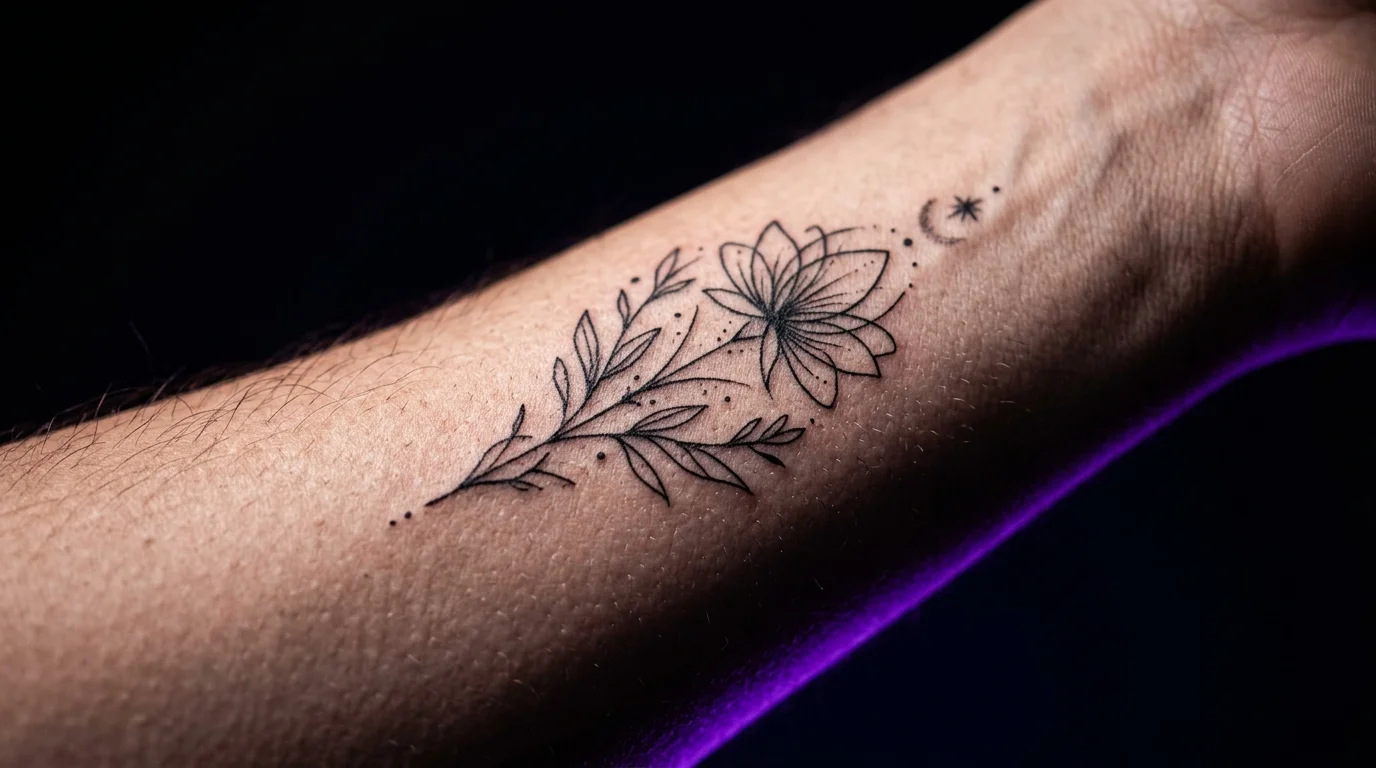
The physics of tattoo fading starts in the dermis — the layer where ink actually lives. UV radiation doesn’t just tan the surface; it penetrates to the dermis and breaks down pigment molecules. Research published in Photodermatology, Photoimmunology & Photomedicine confirms that UV radiation causes premature fading of colored tattoos — and the same mechanism applies to black ink, just more slowly.
Fine line tattoos are more vulnerable than bold work for a simple reason: line weight equals ink volume. A hairline stroke carries far less ink per millimeter than a thick traditional outline. When UV starts degrading pigment, bold lines have a buffer — they can lose ink and still read clearly. Fine lines don’t have that buffer. A stroke that’s a quarter-millimeter wide can soften to the point of illegibility before a bold outline shows noticeable change. The full minimalist vs. traditional comparison covers exactly how these two styles diverge at the five and fifteen year marks.
Placements that change the math dramatically:
- Ribs, upper back, hip, inner upper arm — low UV exposure by nature, protected by clothing most of the day. Fine line work here holds its edges longest.
- Forearms, wrists, hands — among the highest cumulative UV exposures on the body. Fine line work in these areas fades measurably faster than shielded placements. The forearm placement guide covers why inner vs. outer forearm also affects how fine line work holds over time.
- Feet and ankles — compound the UV problem with constant friction (shoes, socks), which accelerates surface-level changes to healing and mature skin alike.
The same fine line design in two different placements can look entirely different at year ten. That’s not a failure of the style — it’s physics.
What Actually Changes as Fine Line Tattoos Age
The word “fading” covers a few distinct processes that look different and happen on different timelines.
Line spreading — Over years, ink particles in the dermis shift slightly. This is normal for all tattoos, but fine lines have less room before a spread changes the visual. A line that was 0.3mm wide may read as 0.5–0.6mm wide after a decade. On bold work, that’s imperceptible. On fine lines, it softens edges and reduces the crispness that defines the style.
Contrast loss — Fine line tattoos use less ink density overall. As ink fades, the contrast between the linework and the skin decreases faster than with saturated blackwork. A fine line piece that reads as sharp black against skin tone at year one may read as a softer grey by year ten, especially on lighter skin tones where the contrast was already narrower.
Collagen loss — Aging skin affects all tattoos, but fine lines most visibly. As skin loses collagen and elasticity over decades, the smooth surface that keeps fine lines reading cleanly changes. Dermatologist Matthew J. Mahlberg, quoted in AARP’s guide to tattooing after 50, explains that collagen loss affects how tattoo ink reads in the skin — placement on thicker, firmer areas minimizes this effect over time. The practical implication: the body regions that age best structurally (upper back, shoulders, ribs) are the same ones that hold fine line work best.
What doesn’t change: the basic fact that fine line tattoos are permanent and can be touched up. Lines that have softened can be refreshed by a skilled artist. The piece doesn’t become unsalvageable — it becomes a piece that may benefit from maintenance.
The Artist Variable: It Matters More Here Than in Most Styles
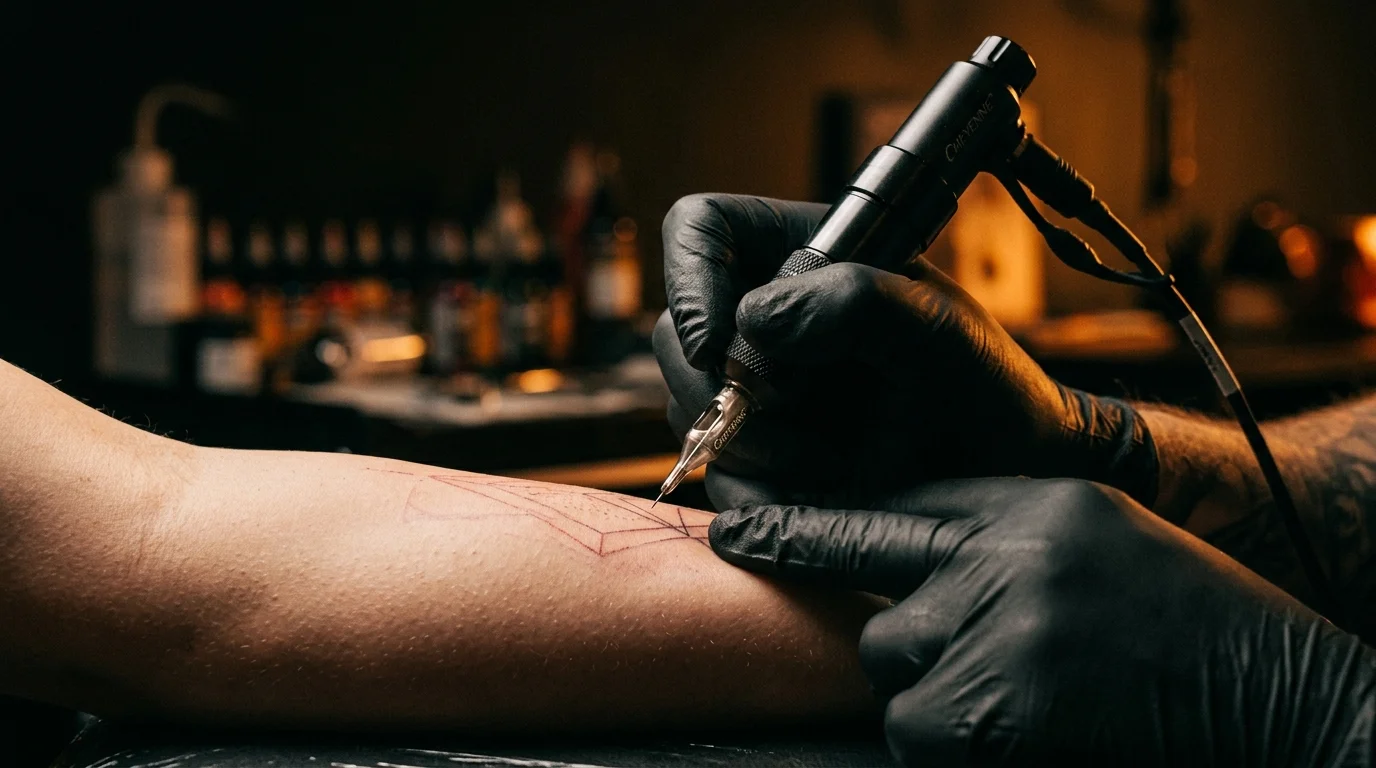
Fine line technique is unforgiving in a way that most styles aren’t. The difference between a fine line tattoo that holds for twenty years and one that blows out in three often comes down to needle depth and ink saturation — both of which are in the artist’s hands, not yours.
A line deposited too shallow (in the epidermis rather than the dermis) heals out entirely. The epidermis turns over continuously — ink placed too close to the surface is shed with dead skin cells within months. This looks like patchy healing, and it means the tattoo simply won’t hold long-term regardless of how well you protect it.
Conversely, a line deposited correctly in the dermis, with the right ink viscosity for fine line work, creates a stable deposit that UV can degrade slowly over years rather than weeks. The artist’s experience with fine line technique specifically — not just tattooing in general — determines this. Looking at healed work in an artist’s portfolio matters more here than in any other style. Fresh fine line work looks sharp in almost anyone’s hands. Healed work shows who can actually make it last.
Research on tattoo regret bears this out: technical quality and aging poorly ranks as the third most common regret reason (41% of regretted tattoos), behind only changed personal meaning and placement dissatisfaction. For fine line work especially, artist quality is the variable that separates a regret story from one that still reads beautifully at year fifteen.
What Holds Up, What Doesn’t: Style Choices Within Fine Line
Not all fine line designs age equally. Within the style, some choices create more longevity than others.
Designs that age better:
- Single continuous lines rather than dense cross-hatching — a solo botanical stem ages more gracefully than tightly packed shading that can blur into grey masses
- Higher contrast subject matter — a solid black fine line silhouette holds better than a delicate grey-wash design that was always close to the skin’s tone
- Simpler compositions — a fine line crescent moon holds its legibility longer than a micro-portrait where each detail is competing for 1mm of space
Designs that show age faster:
- Micro lettering — tiny text blurs as lines soften, making it unreadable faster than any other fine line element
- Very dense linework in small areas — the same line-spreading process that’s imperceptible in an open design becomes visible when lines are already millimeters apart
- Gradient shading with no dark anchors — designs that fade from dark to light lose the light areas fastest, leaving incomplete-looking gradient tails
This isn’t a reason to avoid complex fine line work — it’s a reason to understand what you’re choosing. A densely detailed fine line piece may need a touch-up at year eight. A simpler fine line design on a shielded placement might go fifteen years without it.
The Anxiety Underneath the Question
The people searching “fine line tattoo aging” aren’t usually asking a technical question. They’re asking: am I going to regret this? The research on why tattoo regret actually happens points to design choices and placement far more than style aging — which matters for fine line specifically. If you’re drawn to the painterly, loose aesthetic of watercolor work instead, the watercolor tattoo aging guide covers how that adjacent style compares — similar restraint, different structural trade-offs.
Ipsos research on tattooed Americans found that 92% of people with tattoos say they’re happy with them — including people who have had tattoos for over a decade. The “will I regret it?” spiral that fine line aging questions are often standing in for doesn’t play out the way people fear, for most people.
What does drive regret in fine line work specifically is the mismatch between “how it looks in a reference photo” and “how it looks on my body.” A design that reads as delicate and perfectly proportioned on someone else’s forearm can land differently on your skin, your proportions, your specific placement. This is the actual aesthetic risk — not the twenty-year question.
Before you book a session for a fine line piece you’ve been sitting with, TattThat lets you place the design on a photo of your actual body. Not a stock forearm — your forearm, your skin tone, your exact placement. The question isn’t whether fine line ages well in the abstract. It’s whether this specific design, at this specific size, reads the way you need it to on you. That confirmation is the step most people skip.
For help deciding whether fine line is the right style for you in the first place, the tattoo style guide walks through how each style holds up and who it suits.
See It on Your Skin Before You Commit
Upload a photo, pick a design, and see exactly how it'll look — in seconds. 2 free previews, no card required.
Try TattThat Free →