Small tattoos feel like the safe choice. Subtle. Low-commitment. Easy to hide if your workplace gets weird about it.
Here’s the inversion: small designs are among the most regretted tattoo types — not because they’re small, but because “small” makes people skip the placement question entirely. The decision gets compressed. The size feels inconsequential. The spot gets chosen in seconds.
That’s where it goes wrong.
The best small tattoo placements for women share a few things in common: they use the body’s natural structure to frame the design (a collarbone, the curve behind an ear, the natural ledge of a shoulder blade), they’re protected from the friction and sun exposure that cause fading, and they give the tattoo a reason to sit exactly where it does. Placement is the difference between a tattoo that reads as curated and intentional versus one that feels like it got lost on your skin.
The spots that make small tattoos look most intentional
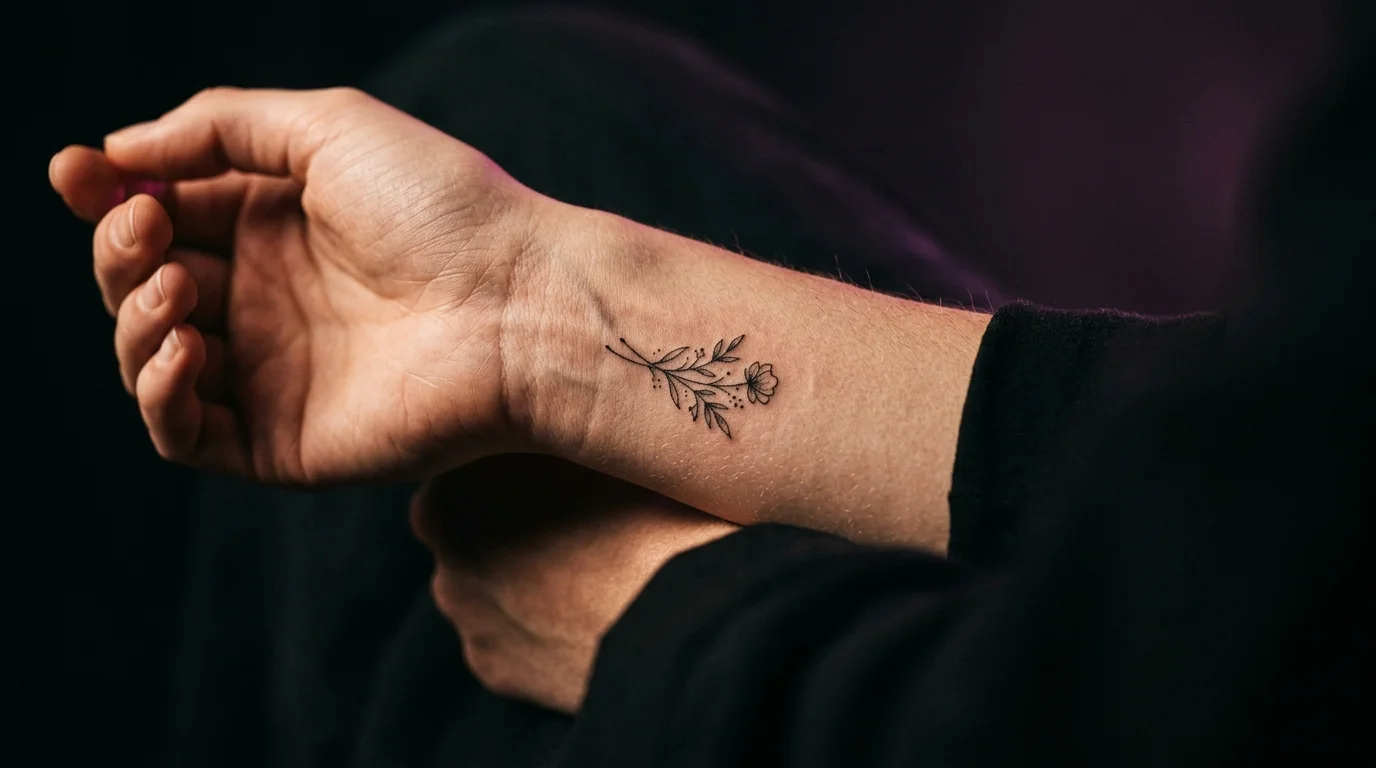
Inner wrist. One of the most-requested placements for a reason — the wrist’s natural curve gives even a 1-inch design a visual pedestal. Easy to see, easy to show. Keep designs under 2 inches here; wider pieces look off-proportion against the narrow surface. The wrist tattoo placement guide covers the inner vs. outer wrist tradeoff in full.
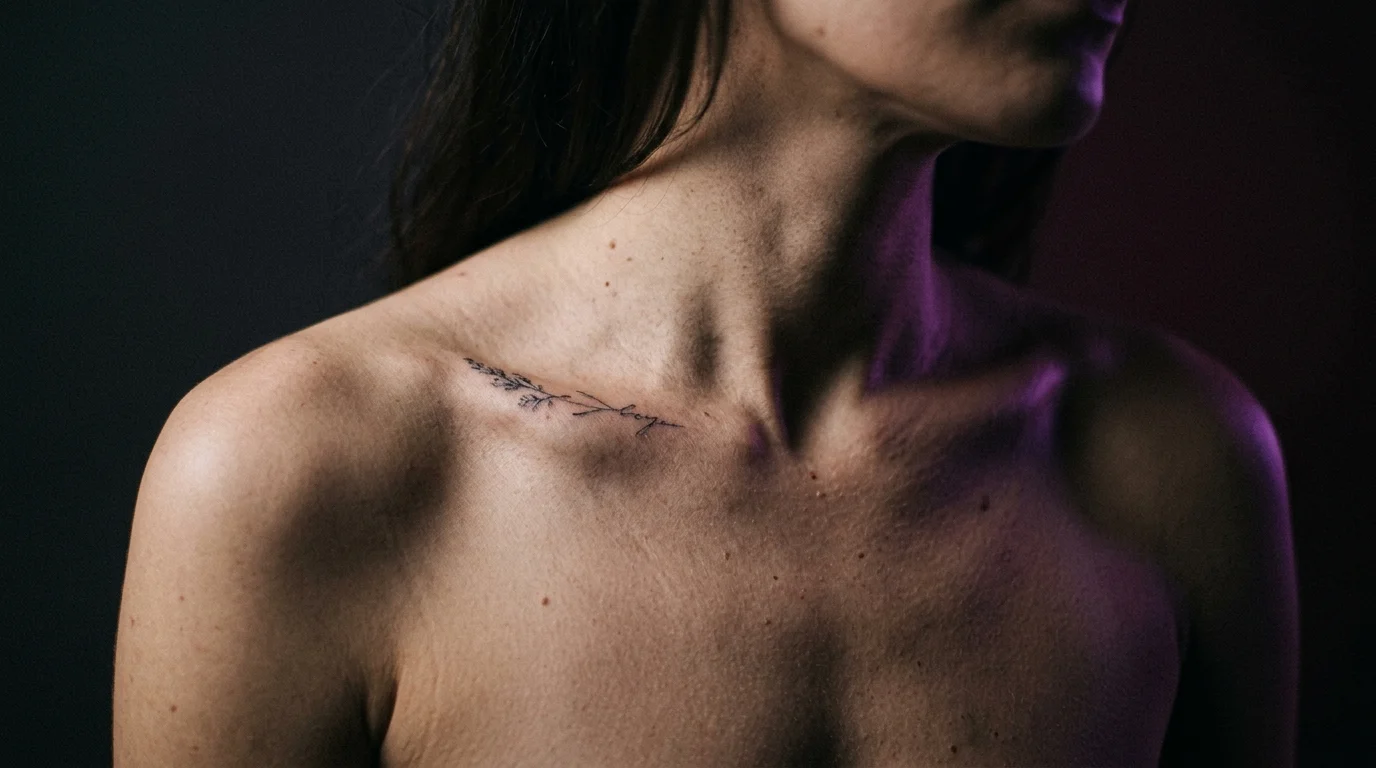
Collarbone. The clavicle is practically a built-in frame. Designs that follow the bone horizontally — a short phrase, a delicate floral, a minimal branch — sit naturally because the body structure justifies them being exactly there. Necklines show it; a button-up hides it completely.
Behind the ear. Reads as deliberate even when it’s tiny. Works best for very simple designs — a small crescent, a single wave, a leaf. Anything with detail gets lost at this scale. Keep it under an inch, and trust that less is more.
Nape of the neck. One of the most versatile small placements on the body. Hidden when hair is down, revealed when it’s up — which means you control when it’s seen. The hairline creates a natural frame. Vertical or compact designs sit better here than wide horizontal ones.
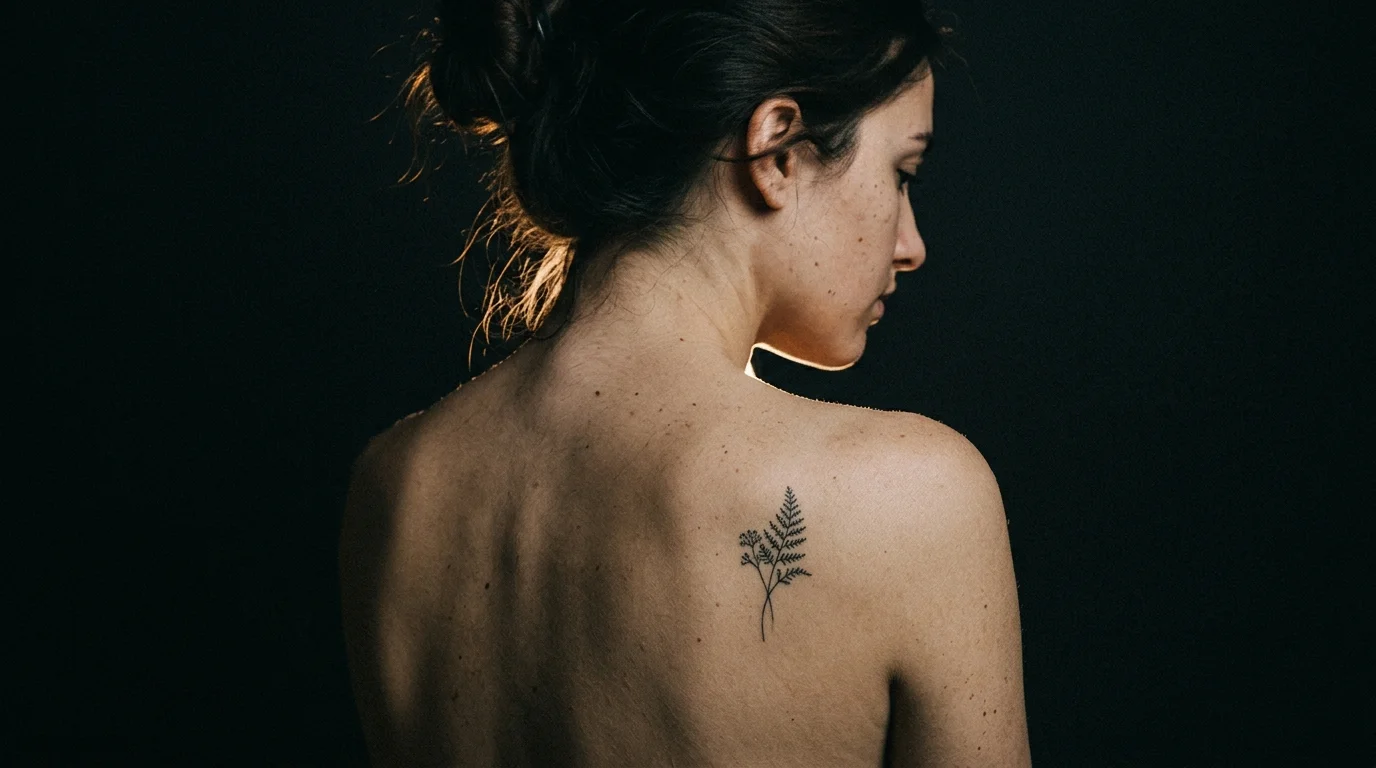
Outer shoulder blade. A flat, stable canvas with minimal friction and minimal daily sun exposure. Designs here hold their sharpness longer than almost any other small placement. The shoulder’s slight curve gives the tattoo a sense of three-dimensionality without a complicated shape.
Where small tattoos fade fastest
Fingers. The most-requested placement that artists are most likely to push back on. Finger skin regenerates fast, and the knuckles take mechanical friction from everything — typing, dishes, carrying bags, constant hand washing. A fine-line finger tattoo looks clean for maybe six months. After that, blowout and fading are the norm, not the exception. Many studios won’t guarantee finger work for this reason, and most experienced tattooers treat finger placement as a touch-up commitment, not a one-and-done session.
Feet and toes. Same mechanics — high friction from shoes, frequent sun when bare, skin that moves constantly. The top of the foot holds up better than the toes, but anywhere near the sole or the knuckles of the foot is a fast-fade zone.
Inner wrist. Looks great; ages faster than people expect. The inside of the wrist faces upward constantly — during driving, desk work, phone use. Black ink stays, but any color fades noticeably faster here from ambient UV exposure.
Ribcage. The skin stretches with every breath, shifts with weight changes, and sits over very little muscle. Small designs hold their lines better than large ones here, but fine detail tends to blur with time. If you want this placement, keep it simple and go slightly larger than you think you need.
The size question most people get wrong
There’s a floor below which any tattoo design loses structural integrity. For most professional artists, that’s around 1 inch for simple shapes — a clean circle, a solid minimal symbol, a single initial. For anything with detail — petals, animal features, multi-stroke lettering — 1.5 to 2 inches is the safer minimum.
The reason is ink physics. Fine lines at tiny scale are drawn within fractions of a millimeter of each other. Over years, the ink migrates slightly outward (blowout), and those lines merge into a blurry shape that no longer reads as what it was. What looked delicate at the appointment looks muddy at year three.
Placement amplifies this in both directions. A 1.5-inch design on the outer shoulder blade — flat, stable, rarely flexed — will hold far longer than the same design on the inner wrist or behind the knee. The more dynamic or friction-prone the placement, the more size you need to survive it.
The rule: scale to stability. Pick the right spot first, then size the design to it. The tattoo size guide has a full breakdown of how scale interacts with placement and body proportion.
Where placement regret actually comes from
Research on tattoo identity and self-expression shows that people with high tattoo satisfaction tend to describe their ink as an extension of identity — something they chose deliberately. The dissatisfaction pattern looks almost opposite: rushed decisions, placement chosen without testing, designs that feel disconnected from their context on the body.
For small tattoos, the most common placement regrets follow a predictable pattern: inner wrist when professional visibility turned out to matter more than expected; ankle when the person lives in heels and the design disappears; behind-the-ear when keeping it visible requires constantly shaving or pinning hair back.
None of these are bad placements. They’re placements that deserved a longer look before committing.
Ipsos data shows 92% of tattooed people are satisfied with their ink overall — the people who are happy didn’t get luckier on design, they got more deliberate on placement. Before you book, spend a week putting a small pen mark where you’re thinking. Wear your actual clothes. Put your hair up, put it down. Notice how often you see it, and whether that matches what you wanted.
Test it on your skin before you decide
For small placements especially, a half-inch in either direction changes the whole effect. TattThat lets you put any design on your actual body — scaled, positioned, on your own skin — so you can see exactly how a collarbone placement reads differently than a shoulder blade, or whether inner wrist or outer wrist gives you the proportions you were imagining.
That’s the step most people skip. It’s also the step that makes the difference between a tattoo you love in year five and one you’re covering up.
For placement decisions beyond small tattoos — including how different body zones compare for visibility, pain, and longevity — the full tattoo placement guide covers the complete picture.
See It on Your Skin Before You Commit
Upload a photo, pick a design, and see exactly how it'll look — in seconds. 2 free previews, no card required.
Try TattThat Free →