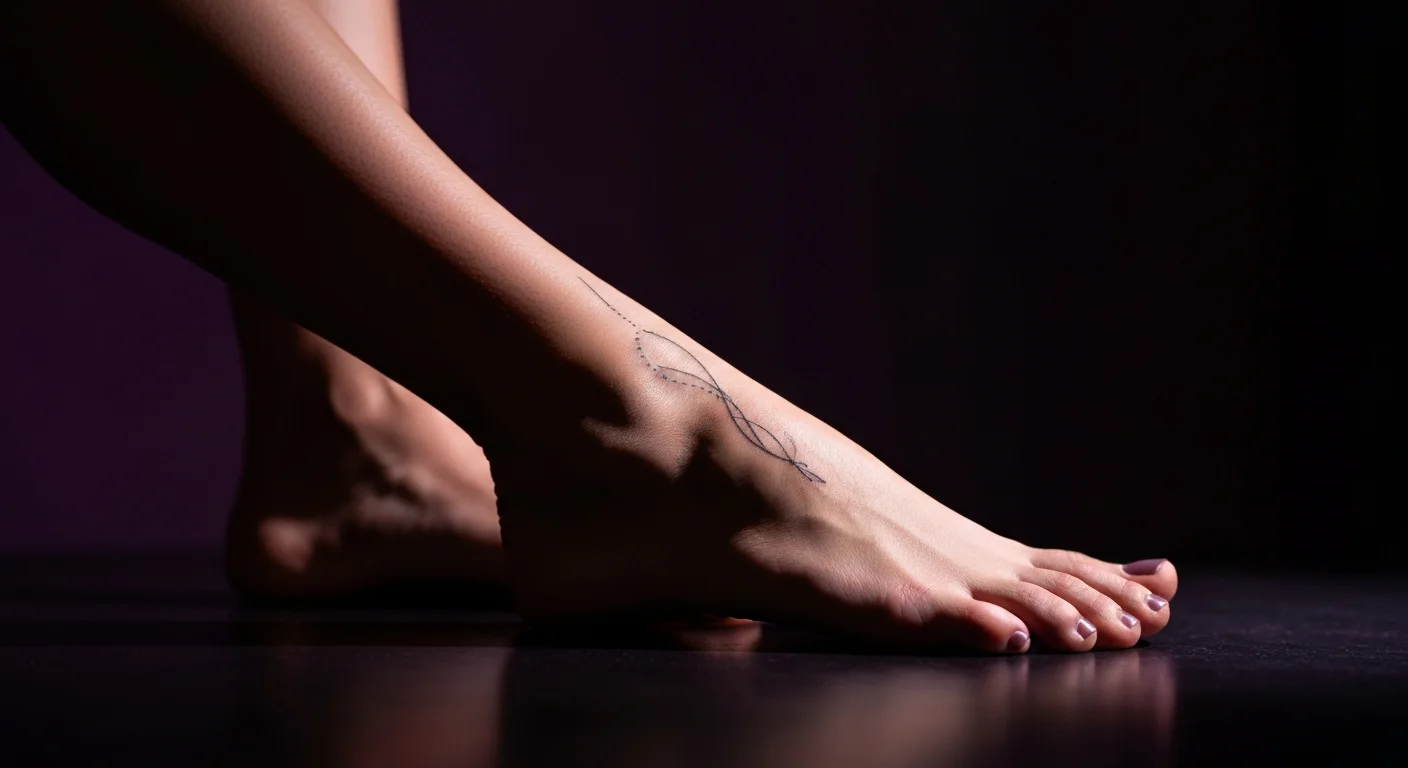
Foot tattoos have a reputation problem.
Ask around and you’ll hear the same warnings: they fade fast, they hurt, shoes destroy them, and artists quietly dread doing them. All of that is true in some measure. What doesn’t get said is the other half of the picture: foot tattoos are consistently among the least-regretted placements people get. The people who choose feet have usually thought it through. They know the tradeoffs. They want the placement anyway — and they tend to be glad they went for it.
The bad reputation comes from people getting foot tattoos without understanding what they’re committing to. The low regret rate comes from people who go in with clear expectations.
The direct answer: foot tattoos work when you pick the right spot on the foot, choose a design suited to the canvas, and accept the maintenance reality. Get those three things right and a foot tattoo can be one of the most personal, least-public placements you own. For a full overview of how foot compares to every other placement on the body, the tattoo placement guide covers the tradeoffs across all major spots.
Top of Foot vs. Ankle vs. Inner Ankle — Three Different Placements
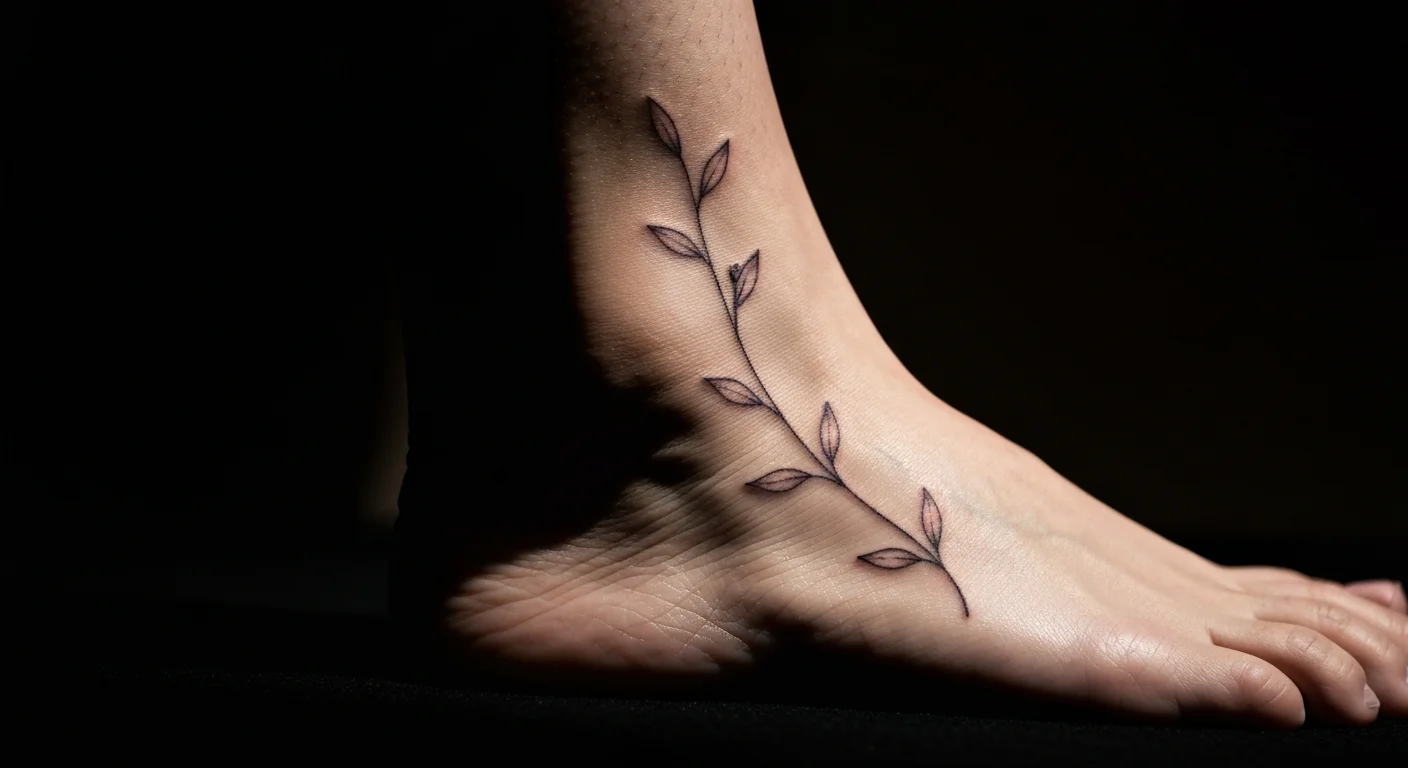
“Foot tattoo” covers three genuinely different placements, and they behave very differently.
Top of foot is the most visible and the most technically demanding. The skin here is thin — bone is close to the surface, with minimal muscle or fat beneath. Shoe straps, sock edges, and the constant flex of your foot through the day all work against ink longevity here. It’s also the most painful spot on the foot for most people. Designs read clearly on a flat surface, but the top-of-foot curves noticeably, which means straight-line designs and symmetrical compositions distort more than on arm or leg placements.
Ankle (outer ankle, over the ankle bone) is the sweet spot for most foot placements. The skin sits over more stable structure than the top of the foot, the pain is lower, and the spot is naturally framed when you’re wearing sandals or going barefoot. The curvature wraps designs around the bone, which can look intentional when planned well.
Inner ankle is the most intimate foot placement — you see it from a seated position, it faces toward your other leg. The skin here is thin but stable, and the relatively flat surface handles fine detail better than the outer ankle or top of foot. It’s also easier to conceal entirely with an ankle sock.
All three share the same maintenance challenge: sun exposure, shoe friction, and movement all work against you. The ankle spots hold up better. Top of foot requires the most touch-up attention over time.
Foot Tattoos Fade Faster — But That Doesn’t Mean They’re Fragile
The fading reputation is real, but it’s overstated when applied to all foot placements equally.
Top of foot tattoos — especially fine-line or color work — will lose definition faster than comparable tattoos on your arm or calf. For context, even the forearm — already a sun-exposed placement — ages more slowly than top-of-foot because the skin is more stable and shoe friction isn’t a factor. The combination of regular UV exposure (any time you’re in sandals or barefoot), friction from shoes, and the constant flex of the skin creates an environment that breaks down ink faster than more stable placements. UV light causes premature ink pigment breakdown — the AAD recommends SPF 30+ applied consistently, every two hours of sun exposure. On a foot, that means being intentional every time you go out in sandals or to the beach.
Bold, black designs hold substantially longer than hairline or color work. A simple solid-black design on the outer ankle can look strong for a decade with care. A delicate floral with pale-colored petals on the top of the foot may need a touch-up within two or three years.
Ankle placements are more forgiving. They see less direct shoe contact, experience less flex, and are easier to protect with sunscreen. If longevity matters to you, ankle over top-of-foot is the clear choice.
One honest calibration: research on tattoo placement and regret consistently finds lower extremity tattoos — feet and legs — have some of the lowest regret rates of any placement, sitting around 20%, versus 29.3% for upper extremities and 44.1% for the face. The fading reality is a known trade-off for foot placement fans, not a surprise. People who choose feet tend to make peace with the maintenance before they commit.
The Pain Is Real — Here’s What to Actually Expect
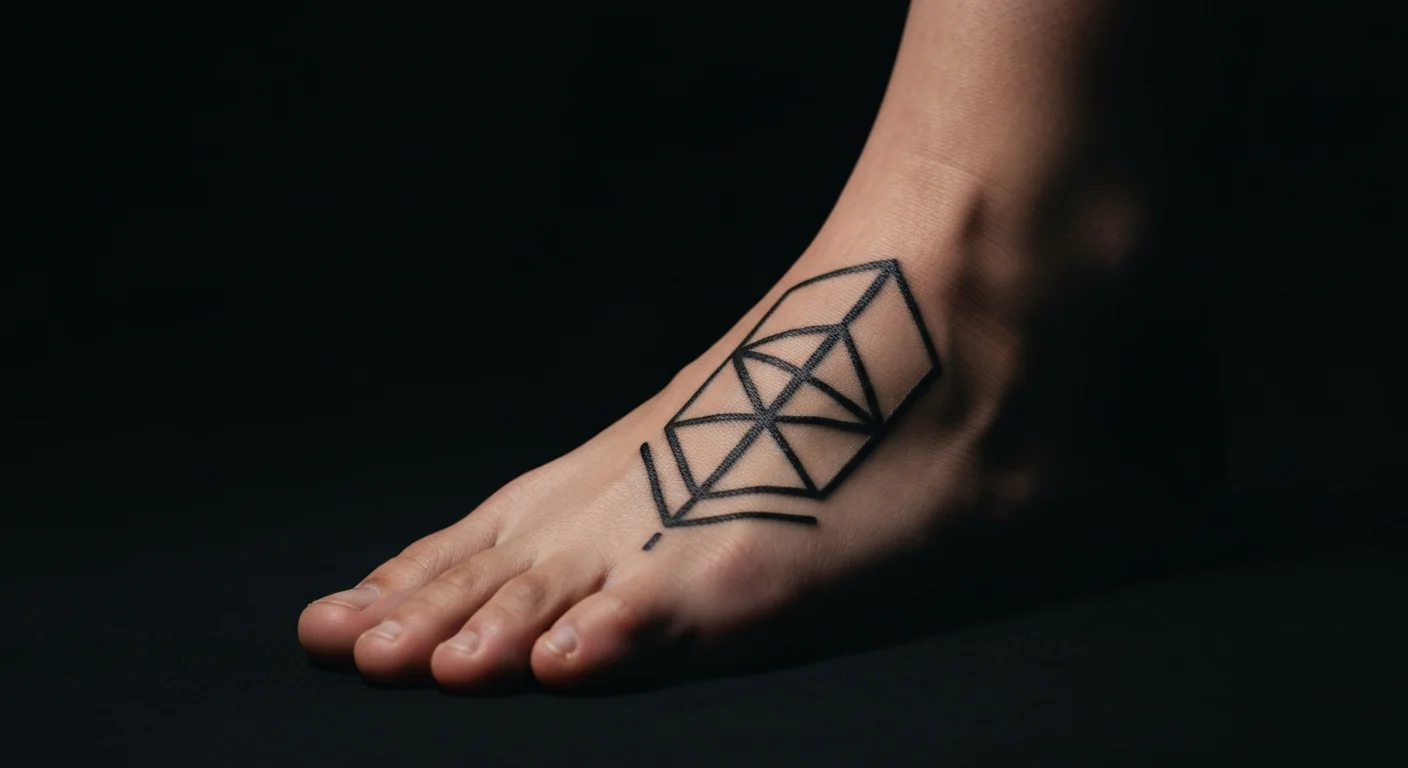
Top-of-foot pain is the most commonly cited reason people avoid the placement — and it’s legitimate. The skin is thin, the bones are right there, and many people describe a specific kind of intensity that’s different from arm or thigh work. Most rate it 6-8 out of 10. Near the toes it spikes.
The good news: foot sessions are usually short. The canvas is small, the design is typically compact, and most foot tattoos are done in under two hours. Intense and brief is easier to manage than moderate and marathon.
Ankle and inner ankle sessions are meaningfully less painful. The skin has more structure beneath it, the sensation is more consistent through the session, and most people find these manageable without heavy preparation.
If you’re considering top-of-foot specifically for the first time: eat a solid meal beforehand, avoid caffeine, and tell your artist if you need a break. The intensity is real but finite.
The Designs That Work on Feet
The foot rewards restraint. Designs that try to do too much on this canvas almost always compromise the outcome.
What works:
- Single-element designs (one flower, one leaf, one simple symbol)
- Short text in a clean, legible font — nothing that requires hairline precision at small scale
- Bold black geometric shapes with clear edges
- Ankle wraps that follow the contour intentionally rather than fighting it
- Designs explicitly sized for the placement — not scaled-down versions of a forearm design
What fights the canvas:
- Multi-element compositions with consistent spacing requirements
- Fine-line florals with delicate petal detail (they blur within a few years)
- Any design that depends on straight horizontal lines running across the top of foot — the flex arc will distort them
- Large, complex pieces that need consistent skin response throughout — foot skin varies noticeably from the arch to the ankle
Scale is the most common mistake. Designs that look right at 4 inches on a reference photo may need to simplify to 2 inches to work at foot placement. Your artist can advise, but arriving with a design already appropriately scoped for the space sets the session up better.
The simpler the design, the better it ages here. Complexity is a liability on the foot in a way it isn’t on larger, flatter, more stable canvases — if your design feels ambitious for the foot, it may be better suited to a first tattoo placement like the upper arm or calf where the canvas is more forgiving.
See It on Your Foot Before You Book
The same research that documents lower-extremity tattoos having some of the lowest regret rates of any placement — around 20%, versus 44.1% for the face — consistently points to the same reason: people who choose feet tend to make peace with the trade-offs before they commit. The choice is intentional, not impulsive.
The one step that most separates confident foot placement decisions from ones that create doubt: seeing the actual design at actual scale, on your actual foot, before the needle touches skin.
Use TattThat to upload a photo of your foot or ankle. Preview your design there — scaled to fit the real space, positioned exactly where you’d want it. You’ll immediately see whether it reads at the size you’re imagining, whether the ankle curvature works for your specific design, and whether the placement feels right before you commit. This is worth doing before you book rather than after, particularly for a placement where design fit and scale are especially unforgiving.
Two free previews. Use one on your first placement idea. If something feels off, adjust before you’re sitting in the artist’s chair.
See It on Your Skin Before You Commit
Upload a photo, pick a design, and see exactly how it'll look — in seconds. 2 free previews, no card required.
Try TattThat Free →