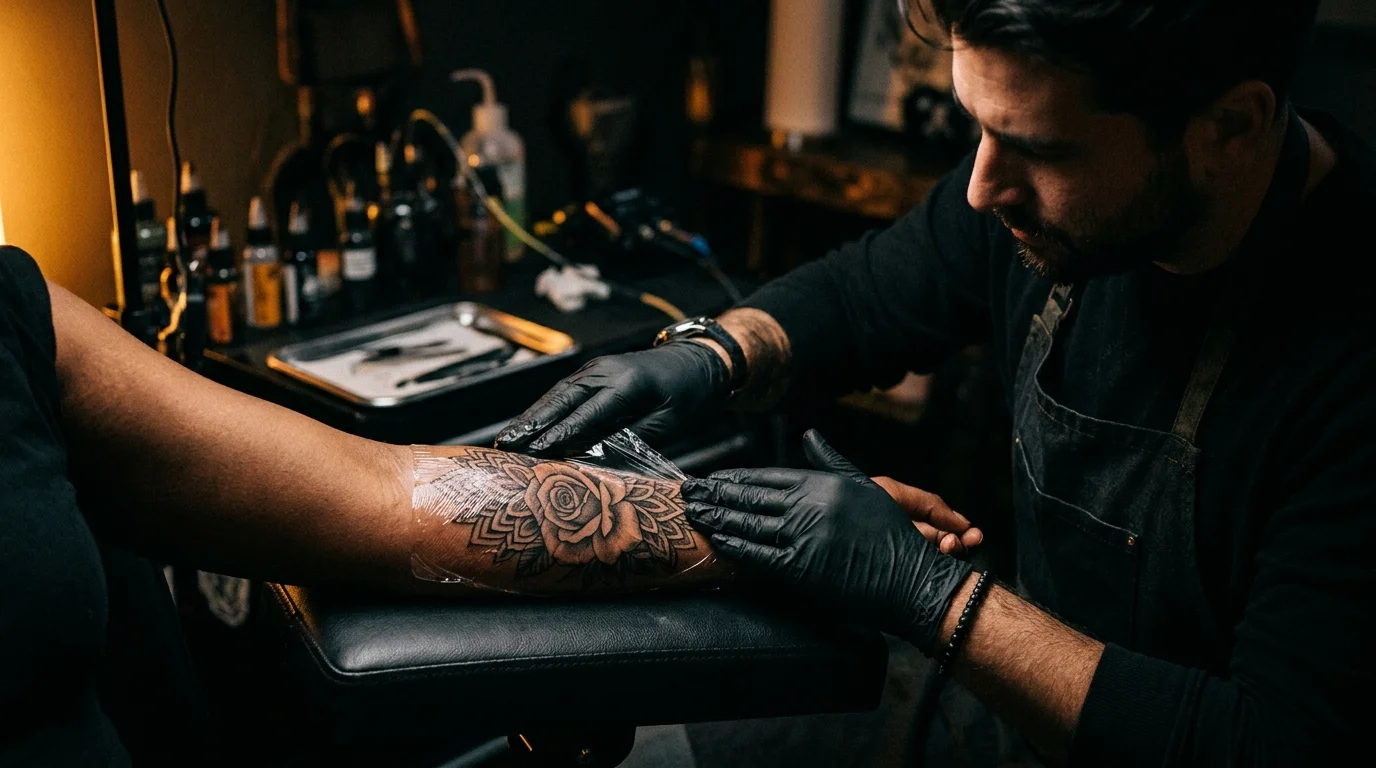
Most of the aftercare advice you’ll find focuses on the first few hours. Keep it covered. Use ointment. Don’t scratch. That part, most people get right.
The part that actually determines how your tattoo looks in year five is the next ten days — and nobody explains what those days are actually doing. Your skin is running an active repair process. What you put on it, expose it to, and how much you mess with it either supports that process or interferes with it. The difference shows up later.
The direct answer: Tattoo aftercare matters because the session delivers ink into the dermis — but it also creates a wound across the epidermis. Your skin’s job for the next several weeks is to close that wound while preserving the ink beneath. What you do during that process determines how much ink stays, how evenly it settles, and how long the detail holds.
The First Week Is When Outcomes Get Decided
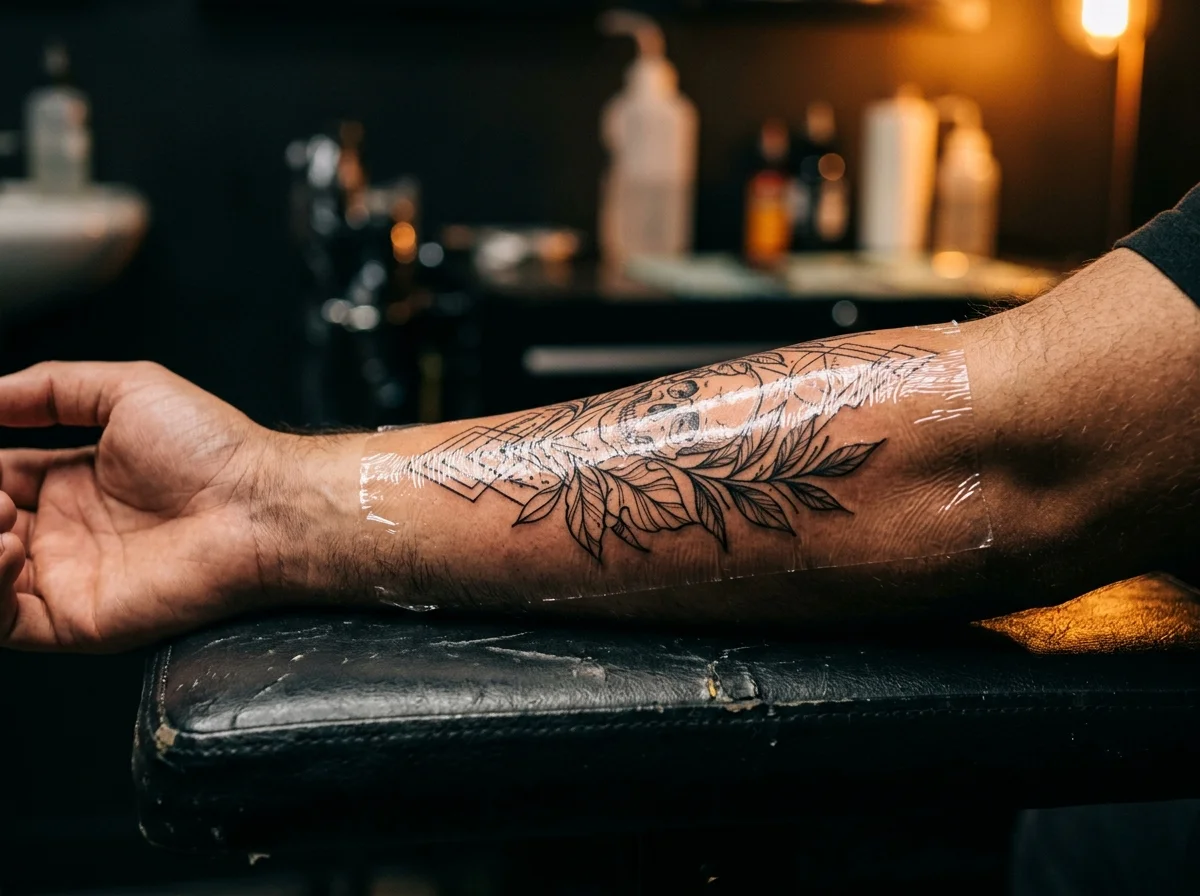
Most people think of healing as passive — the body just figures it out. For tattoos, it’s more conditional than that.
Research on skin barrier function and tattooing confirms that the body actively works to restore the epidermal barrier after needle trauma. The healing skin maintains its hydration profile and compensates for disruption — which is why fresh tattoos feel different from surrounding skin. That process works well when you support it: gentle washing, appropriate moisturization, no friction. It works against you when you interfere: aggressive scrubbing, petroleum products that block pores, tight fabric rubbing the surface during peak inflammation.
The practical implication: most aftercare instructions aren’t conservative preferences. They reflect what the wound actually needs.
Days 1–3: Leave It Alone More Than You Think
Your artist applied a covering before you left for a reason. What’s happening underneath it in the first 24–48 hours: the open channels from the needle are sealing, lymph fluid and excess ink are moving out, and the inflammatory phase that initiates healing is underway. A small amount of oozing is normal — it’s the body clearing the wound.
If your artist used second skin (medical-grade adhesive film): Keep it in place for 3–5 days. Don’t peel the edges out of curiosity. It’s doing its job.
If your artist used plastic wrap or gauze: Remove it after a few hours, wash gently with fragrance-free soap and lukewarm water, pat dry with a clean cloth, and apply a thin layer of unscented ointment. Healthline’s aftercare guide recommends Aquaphor Healing Ointment or A+D for the first week — the goal is a thin protective layer, not a thick coating that traps everything underneath.
What not to do in days 1–3:
- Re-wrap in plastic after the first wash
- Use petroleum-only products that block pores (pure Vaseline)
- Let the tattoo go completely dry and crack
- Touch it constantly to check on it
The tattoo will look slightly blurry, raised, and over-saturated in these early days. That’s normal. It doesn’t reflect the final result.
The Peel Phase: The Part Everyone Gets Wrong
Around day 5–7, the outer skin layer starts peeling. The tattoo looks flaky, milky, or dull. The temptation to pick is strong. Don’t.
This is the most consequential part of aftercare — more people damage their tattoos here than in any other phase. The AAD is direct about why: picking at healing tattoo skin pulls ink out of the dermis along with the dead surface layer. The result is patchy color, blown-out lines, and areas that need touching up. What looks like a flake of dry skin is still attached to ink underneath it.
The peeling skin will fall on its own, on its own timeline. Your job is to keep the area clean and moisturized enough that the peeling happens gradually rather than in large sheets. Wash twice daily, pat dry, apply a thin unscented lotion. That’s it.
The itch is also normal. It’s nerve ending regeneration. Running clean fingers lightly over the area — not scratching — relieves it without damage. If the itch is severe or accompanied by redness spreading beyond the tattoo boundary, that’s worth watching.
The dull, milky appearance during the peel phase is temporary. Once the dead skin clears (usually by week 3–4), the color and contrast underneath emerge. This is why you can’t judge a healing tattoo’s final result until the surface has fully settled.
Sun Is the Aftercare Failure That Shows Up in Years
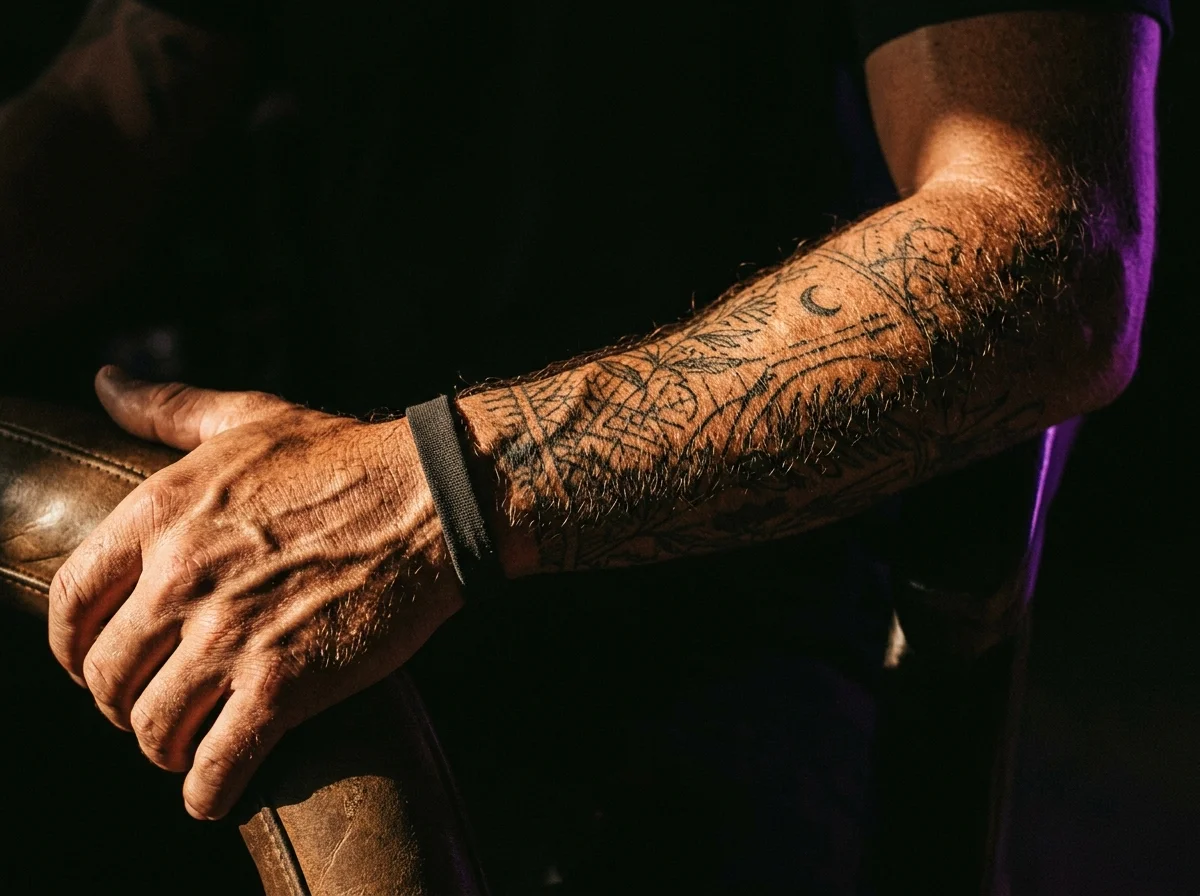
During the healing phase — the first four weeks — direct sun exposure on a new tattoo causes two problems simultaneously: it can blister and burn tissue that’s already compromised, and it begins degrading ink before it’s fully settled. No sunscreen during healing; the chemicals in SPF products can irritate fresh skin. The answer is just coverage: clothing or shade.
After healing, the rule flips: apply SPF 30+ every time the tattoo will be in direct sun.
The AAD recommends SPF 30 or higher on tattooed skin before sun exposure specifically because UV radiation degrades ink over time — colored inks fade faster than black, and lighter tones more than saturated ones. This isn’t a one-season precaution. It’s the single most impactful long-term aftercare habit, and it’s also the one most people drop after the healing period ends.
The tattoos that hold their detail and contrast at year ten are almost always ones on placements that see less sun: ribs, hip, upper back, inner arm. The placements that fade fastest — forearms, wrists, hands — are also the ones with the highest cumulative UV exposure. The placement guide covers which spots age best and why sun exposure is central to that calculation. If your tattoo is on a high-sun placement, SPF becomes non-optional maintenance.
Signs That Healing Isn’t Normal
Normal: redness and swelling for 2–3 days, warmth around the area, minor oozing in the first 48 hours, peeling and itching in week 2, dull appearance during the peel phase. All of this resolves on its own.
Not normal: fever, hot skin that stays hot past day 3, discharge with odor, pain that increases after the initial inflammation subsides, or red streaks extending outward from the tattoo site. These are signs of infection, not normal healing — and they warrant a doctor visit, not more ointment. An infection caught early heals cleanly. Delayed treatment can cause permanent scarring in the tattooed area.
Allergic reactions are less common but do happen: itching and raised skin that doesn’t resolve after the peel phase, particularly in areas with red ink, can indicate a delayed reaction to certain pigments. If your skin stays reactive beyond week 4, a dermatologist visit is the right move.
The standard healing process for a well-executed tattoo on healthy skin is unremarkable. Most people get through it without incident. The aftercare routine is largely about staying out of the way — which is easier when you understand what your skin is doing.
All of this — the two weeks of careful washing, the hands-off discipline during the peel, the sunscreen habit for years after — only pays off if the tattoo was worth it in the first place. That certainty belongs before the session, not after. TattThat lets you place your design on your actual body, at actual scale, before you commit. If you’re going to spend two weeks protecting a tattoo, spend five minutes first confirming it’s exactly where and how you want it.
Aftercare is one piece of the first-tattoo picture. The first tattoo guide covers everything that comes before the session — choosing a design, picking placement, finding an artist, and what to expect in the chair.
See It on Your Skin Before You Commit
Upload a photo, pick a design, and see exactly how it'll look — in seconds. 2 free previews, no card required.
Try TattThat Free →