Your shirt goes on wrong the morning after. You’ve forgotten, briefly, that your chest is a healing wound. The fabric catches the edge of fresh ink and you remember — sharply — exactly where the needle spent the last few hours. That’s the beginning of the part nobody explained.
The session is hard. The sternum sits directly over bone with almost no soft tissue cushioning, and every pass of the needle transmits into your ribcage differently than arm or leg work does. But the session ends. What continues is the recovery — and the sternum is one of the more demanding placements to heal, because the skin over your chest is never at rest. Every breath moves it. Bra straps, seat belts, and tight fabric all land exactly where the tattoo needs protection. Managing that window is harder than most people expect going in.
The direct answer: sternum placement works best for symmetrical designs that follow the chest’s natural vertical axis, sized generously enough that detail holds as the skin ages. It’s one of the more demanding placements for both session and recovery. Done right, it’s among the most striking locations on the body.
The Sternum Hurts More Than Most Placements — and Here’s Why That’s Not the Whole Story
Pain from a sternum tattoo is real. It also rarely ends up being the deciding factor for people who sit through the session.
The sternum sits directly over the breastbone with no muscle between the needle and bone, and minimal fat cushioning — which means vibrational energy from the machine transmits almost directly into the skeletal structure rather than being absorbed by soft tissue. Research on tattoo pain by body location found that bony prominences consistently produce the highest pain intensity scores, with chest placements ranking in the upper percentiles alongside ribs, shins, and elbows.
What surprises people who’ve only had arm or leg work: it’s not just the intensity. Bony placements produce a sharper, more radiating sensation than the dull pressure of fleshy areas. Some people describe feeling the vibration in their collarbone or teeth. That’s not unusual — it’s anatomy.
A few things help: going in well-rested, eating a solid meal beforehand, and booking with an artist experienced in chest work. They’ll pace the session with more breaks and work in shorter passes rather than grinding through a single long push. Bringing headphones, a podcast, or something to focus on makes a genuine difference when the session stretches past two hours. Numbing cream applied ahead of time can take the edge off, though your artist needs to account for how it affects skin texture when working — ask about their preference before applying anything. Session length for most mid-sized sternum pieces runs 2–4 hours.
The reason pain rarely ends up being the dealbreaker: it stops the moment the session ends. The healing continues for weeks.
Healing Takes More Attention Here Than Almost Any Other Placement
The sternum heals under conditions most other placements don’t face.
Your chest expands and contracts thousands of times a day during normal breathing — meaning the skin over a healing tattoo is in constant motion. That’s not dangerous, but it does mean the healing surface is never fully at rest the way a tattoo on your shoulder or calf would be. Add clothing friction and you have a placement that requires more active management than people typically anticipate.
The AAD notes that healing complications — delayed healing, irritation, and inflammation — are more likely in placements subject to friction, moisture, and repeated movement. The sternum qualifies on all three counts.
For anyone who wears a bra: underwire and bra straps sit exactly where a sternum tattoo needs protection. For the first 3–4 weeks, skip underwire entirely and switch to soft bralettes or bandeau styles that clear the tattoo. Sports bras with high compression and synthetic fabric are often the worst option during initial healing — they trap moisture and create consistent friction over the exact area trying to heal. This is worth planning for before your appointment, not the morning after.
Seat belts cross the chest. Most people don’t think about this until they’re driving home post-session. A padded cover or deliberately positioning the belt off to one side during the first week makes a real difference in avoiding that daily friction point.
Sun exposure on a healed sternum piece deserves ongoing attention. The chest is easy to expose without thinking — open necklines, summer heat, beach days. SPF 50+ on the tattooed area isn’t optional upkeep. The tattoo placement guide covers how UV exposure accelerates fading across all placements, but the décolletage and sternum are particularly exposed during warm months without people registering the risk. Treat it like a forearm tattoo you know gets sun all day.
The payoff for doing this work: sternum tattoos heal cleanly when managed well. The skin here is smooth and holds ink well. Once fully settled, a well-healed sternum piece reads sharply for years.
Designs That Use the Sternum’s Shape — and Ones That Fight It
The sternum’s proportions are its biggest constraint and its biggest opportunity. The natural narrowing toward the collarbone and widening toward the chest creates a vertical visual frame that certain designs use perfectly and others actively work against.
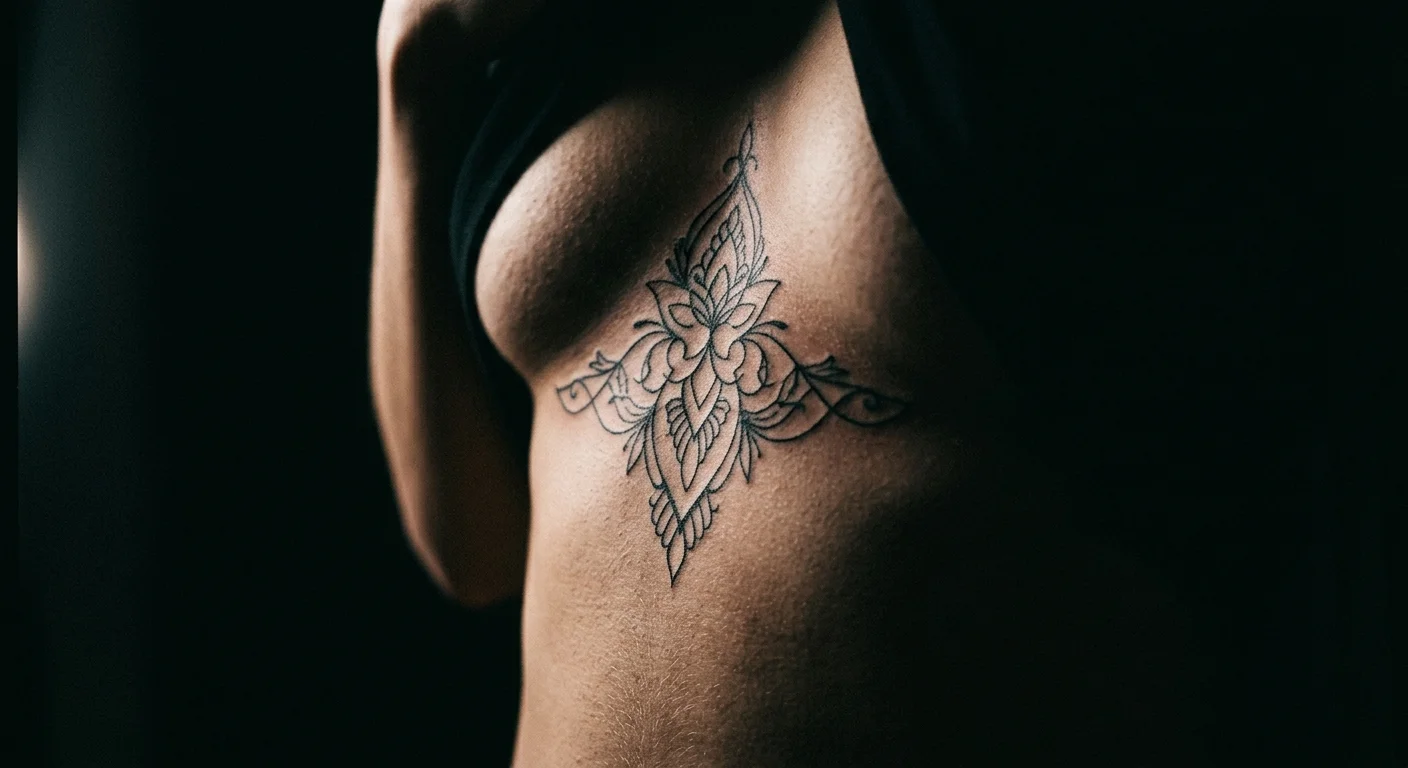
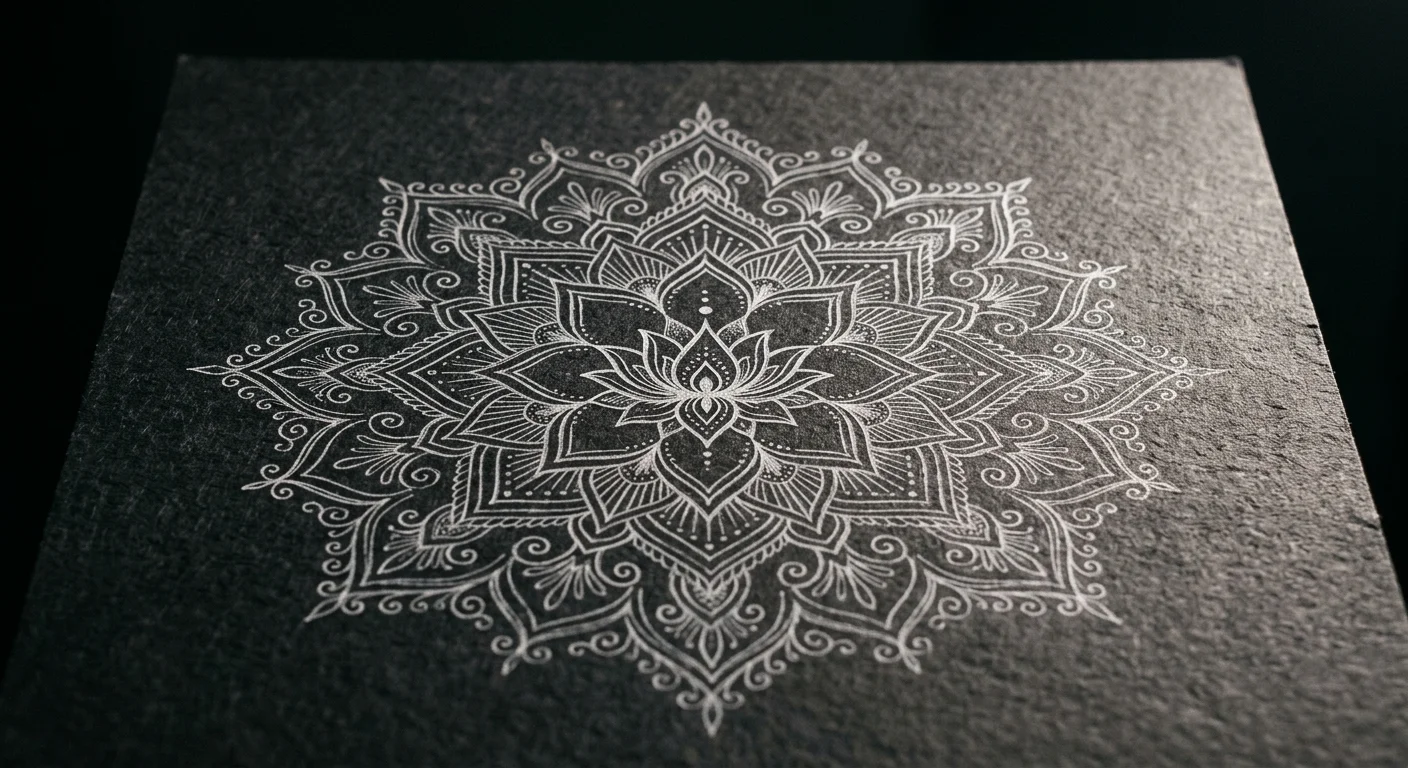
What thrives here: Symmetrical designs centered on a vertical axis. Mandalas, ornamental patterns, elongated floral compositions, geometric designs expanding from a central point, and motifs like moths, butterflies, snakes, and dragonflies that read naturally along the body’s vertical line. The symmetry of the design mirrors the symmetry of the body — it looks intentional because the composition actually fits the canvas.
What needs more planning: Horizontal text spanning across the chest tends to arc and warp because the surface curves in three dimensions. Script that reads straight on a flat reference distorts when applied across the chest’s curvature. Fine line work with closely spaced interior detail needs to be sized generously — at least 3–4 inches across the key elements — so that natural skin movement over years doesn’t blur them together. A good artist will flag this. If yours doesn’t, ask.
Sizing: Most sternum pieces run 4–8 inches in height, and many extend toward the underbust to use the full canvas. Chronic Ink’s sternum tattoo guide notes that the most successful pieces “flow underneath the breasts and follow the natural curves” — the design uses the chest’s shape rather than sitting inside it. A piece that stops abruptly at mid-chest without extending downward can read as contained in a way that fights the body’s natural line. When in doubt about sizing, the tattoo size guide lays out how design complexity sets the minimum viable size — a rule that matters especially for fine line work where going too small compounds over time.
The single most useful step before booking: see your design at actual scale on your actual chest. The sternum’s curvature makes it easy to misjudge sizing from a flat reference image. Use TattThat to upload a photo of your chest, load your design, and position it at the scale you’re considering. Whether a 5-inch piece sits beautifully or looks lost — whether the proportions feel right against your actual body — becomes immediately visible. That question is much harder to answer when you’re making it with paper and guesswork.
See It on Your Skin Before You Commit
Upload a photo, pick a design, and see exactly how it'll look — in seconds. 2 free previews, no card required.
Try TattThat Free →