
“Wait until you’re ready” sounds like good advice. It feels responsible. Patient. Like the kind of thing a thoughtful person does before a permanent decision.
But there’s a hidden cost baked into that phrase that no one talks about. Waiting is free. Waiting forever costs you the design you actually wanted, the timing that was right, and the clarity that only comes from committing to a question rather than leaving it open. Vague waiting isn’t deliberation. It’s just delay with a clean conscience.
The real question isn’t how long to wait. It’s what you should be doing with that time — and how to know when you’ve actually done it.
Spontaneous Decisions Have 3–5x Higher Regret Odds
This is worth sitting with before anything else: 48% of regretted tattoos were spontaneous decisions — walk-in, same-day, unplanned. And 37% of people who regret a tattoo describe it as something they got “on a whim.” One in four of those people felt regret within days. Understanding why those impulse decisions go wrong makes the case for deliberation much more concrete than a calendar ever could.
That’s not a coincidence. Spontaneous tattoo decisions carry roughly 3–5x higher regret odds than deliberated ones. Getting a tattoo under the influence triples your regret odds. So does giving in to peer pressure.
The data on age sharpens the picture further. People who got their first tattoo before age 21 show a 38% regret rate — those who waited until after 21: just 7%. That’s a 5x gap from a few years of additional life context.

Time doesn’t reduce regret by magic. It reduces regret because it creates more opportunities for the design idea to either deepen or dissolve. If it dissolves — if you quietly stop thinking about it, if the meaning fades, if it stops feeling like yours — that’s useful information you got for free instead of paying for it in ink.
The Minimum That Research Actually Supports
If you’re looking for a number, here it is: three to six months with the same idea, at minimum.
People who deliberated for months before getting tattooed report regret rates around 10%. Those who deliberated for years show the lowest rates of all groups studied. That’s not because time is magic — it’s because sustained interest across different emotional states, life moments, and moods is evidence that the desire is durable rather than situational.
Three months means you’ve had the idea through at least one major mood shift. A good stretch. A hard week. A few conversations where you mentioned it and noticed what came out of your mouth. Six months is better. A year or more is the strongest confirmation of all.
None of this means you need to wait a decade. If the same idea has been living in your head for two years and nothing has shaken it, you don’t need more time. You need to book.
Three Questions Worth More Than a Countdown
Watching a calendar is the least useful way to spend the deliberation period. These three questions do more work:
Does the design still feel like yours across different moods? Tattoo ideas that survive multiple emotional states are stickier than ones that feel perfect in one kind of moment. A design you love when you’re feeling expansive but forget about when you’re anxious is more situational than durable. The ones worth getting tend to feel right in both.
Can you explain the meaning without referencing a trend, relationship, or moment? The top regret driver — cited by 47% of people with tattoo regret — is changed personal meaning: the design no longer resonates. Ask yourself whether the meaning is anchored in something about you that’s unlikely to shift, or in something external. If the honest answer is “it meant something at the time,” it may not mean enough to carry permanently.
Have you actually seen it on your body? This one is underrated. Most people choose placement based on reference photos of someone else’s arm, or an artist sketch against a white background. Those aren’t the same thing. How a design looks on a reference image and how it looks on your actual forearm, positioned at your actual bend radius, at the size you actually want — those can be very different experiences.
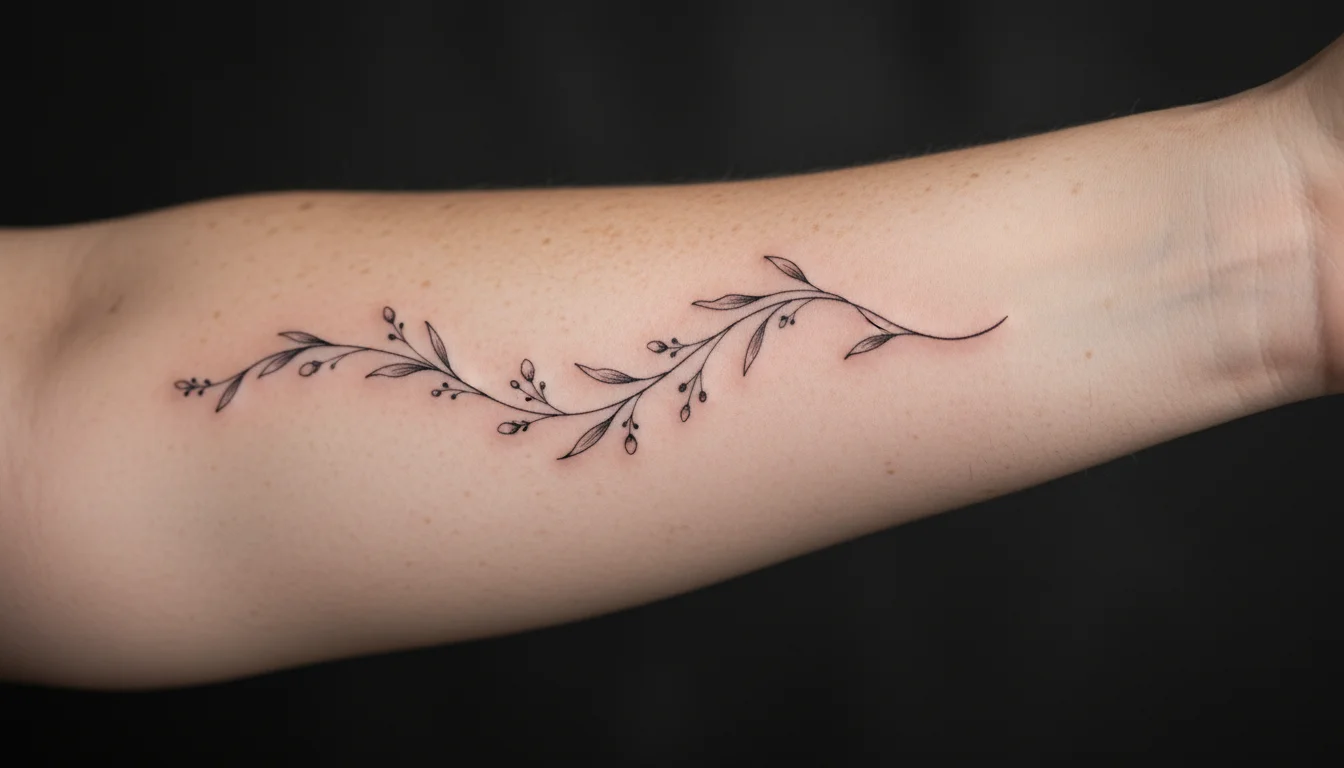
TattThat solves this directly. Upload a photo, pick a design or convert one, and see it on your skin before you book. Drag, resize, rotate — test the placement you actually have in mind instead of approximating from someone else’s photo. It won’t tell you whether the meaning is durable. But it will tell you immediately whether the placement is right, which accounts for 41% of all tattoo regret.
When You’ve Waited Long Enough
Here’s the honest version: you’ll know you’ve waited long enough when you stop asking whether you’ve waited long enough.
That sounds circular, but it’s not. When people are still genuinely uncertain, they’re usually still working through one of those questions above. When they’ve answered them, the question shifts from “am I sure?” to “how do I make sure I’m getting it done right?”
If you’ve had the same idea for six months or more, it still feels like yours across different moods and moments, the meaning doesn’t depend on a person or a season, you’ve seen the placement on your actual body and it looks the way you imagined — you’re done deliberating. These are the specific signs that distinguish ready from not-ready yet. If nerves are the only thing still in the way, that’s a different problem than uncertainty — and one that has its own set of useful answers.
The research points toward one conclusion: the people who regret their tattoos most often aren’t the ones who thought too hard. They’re the ones who didn’t think at all.
One exception worth naming: if you’re pregnant or recently postpartum, the timing question intersects with health considerations beyond just readiness. Getting a tattoo while pregnant carries specific risks that make the wait non-negotiable regardless of how long you’ve had the idea.
The deeper question — what specifically causes people to regret tattoos — is covered in the tattoo regret guide, which is useful context for understanding why the timing decision matters so much.
See It on Your Skin Before You Commit
Upload a photo, pick a design, and see exactly how it'll look — in seconds. 2 free previews, no card required.
Try TattThat Free →