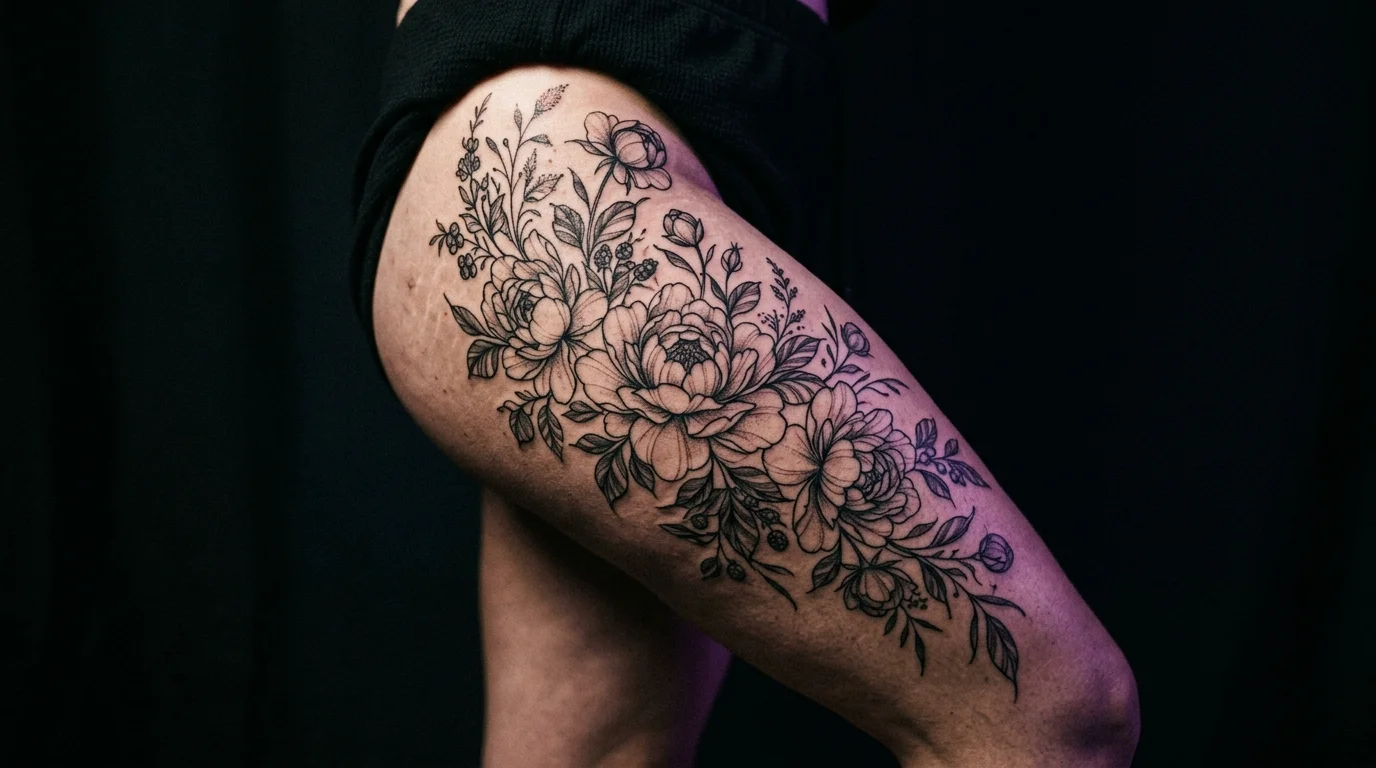
Picture the version of you that’s six months from now. It’s warm enough for shorts. You glance down and see exactly what you wanted — the design sitting right where you imagined it, exactly the scale you hoped for, on the outer thigh that turned out to be the right call. You’ve stopped second-guessing it. It’s just part of you now.
That’s the version most people are trying to reach. The gap between here and there is usually a combination of uncertainty about placement zones, unclear expectations about size, and the nagging question of whether a design that looks incredible in a reference photo will actually translate to your body.
The direct answer: The thigh is one of the most versatile tattoo placements on the body — large canvas, relatively low pain on the outer zone, excellent for a wide range of styles. The main decisions are which zone (outer, inner, or front), how large, and whether the design you have in mind suits the way the thigh curves. Get those three things right, and the thigh is as forgiving as tattoo placement gets.
The Three Thigh Zones Have Very Different Rules
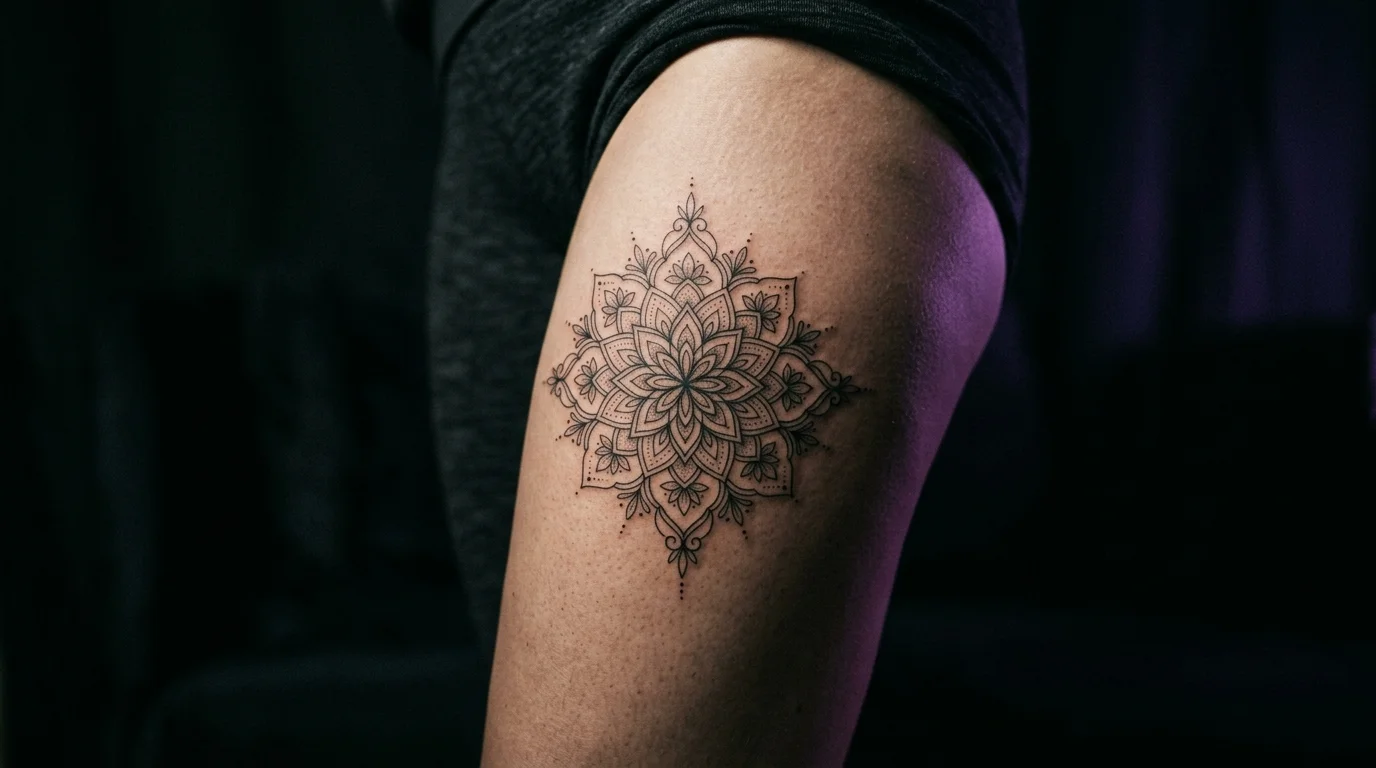
The thigh isn’t one surface — it has three distinct zones that behave differently for pain, visibility, healing, and design.
Outer thigh. The most popular placement and the most forgiving for first-time thigh tattoos. The outer thigh is fleshy, relatively flat on most bodies, and has lower nerve density than the inner surface. Pain rates here typically land around 4-6 out of 10 — research on tattoo pain by body location confirms the outer thigh as one of the lower-intensity placements compared to bony areas, inner surfaces, and anywhere near joint creases. It’s also the most visible zone — a design here shows fully with shorts or a swimsuit, which is usually the point.
Designs up to 8-10 inches sit comfortably on the outer thigh without looking crowded. It’s one of the few placements where going bigger is genuinely an upgrade rather than a risk.
Inner thigh. Private, intimate, and significantly more sensitive than the outer surface. The inner thigh has thinner skin, more nerve endings, and is subject to friction during healing — which requires more careful aftercare in the first two weeks. Pain here rates higher, typically 6-8 out of 10. What you get in exchange is maximum privacy: this placement is visible only when you choose to show it.
Inner thigh designs tend to be more delicate — smaller pieces, fine line work, designs that suit a vertical orientation. Large solid fills in this zone are harder to heal cleanly due to friction.
Front thigh / quad. More visible than the inner thigh, more exposed than the outer. The front thigh is a good surface for vertical designs that run along the length of the leg. Designs here are visible in shorts from the front but don’t wrap around the way outer thigh pieces can. Pain level is moderate — closer to the outer thigh than the inner, but increases as you move toward the knee.
The Designs That Work Best on the Thigh
The thigh’s size means it can hold almost any style, but some work better than others.
Large florals and botanicals. This is the most consistently popular category for a reason. Flowing organic shapes — peonies, roses, lotuses, wildflower clusters — complement the natural curves of the thigh. The design doesn’t have to fight the surface; it follows it. Florals also scale well: a 6-inch peony looks intentional, not undersized.
Mandalas and geometric designs. The flatter outer thigh surface is well-suited to geometric precision. Mandalas particularly benefit from the available space — they need room to develop the outer rings without being compressed. One caveat: geometric patterns with precise angles are more sensitive to body changes over time than organic shapes. If weight fluctuation is a concern, florals and flowing designs are more forgiving.
Fine line work. The thigh handles fine line well because there’s room for detail to breathe. A fine line botanical spanning 7 inches on the outer thigh can carry the kind of detail that would get lost on a wrist. The key is artist selection — fine line at this scale requires a specialist who understands how hairline work heals at larger sizes. Check healed photos specifically.
What doesn’t work as well: Very small pieces (under 3 inches) on the outer thigh can look timid relative to the canvas. Dense blackwork solid fills on the inner thigh are harder to heal. Portrait work over a wide area requires careful consideration of how the design will read as the surface curves.
Pain and Healing: What to Actually Expect
The outer thigh is genuinely one of the easier placements. Sessions of 3-4 hours are manageable for most people — the biggest challenge is keeping the leg still and staying comfortable in position, not the pain itself. If you’re planning a larger piece (6+ hours), splitting into two sessions is common and keeps quality consistent; fatigue affects the artist as much as the client.
Inner thigh healing requires specific attention in weeks one and two. The friction from thighs touching during walking — even with shorts, even with careful movement — means the plastic film wrap or second-skin needs to stay intact longer. Loose clothing for the first two weeks is less optional here than at other placements. The AAD’s guidance on caring for tattooed skin notes that friction is one of the primary causes of premature peeling, which can pull ink before it’s fully set.
Sun exposure matters more on the outer thigh than people expect. Summer shorts means UV exposure as soon as the tattoo is healed — usually around 6 weeks. SPF 30-50 on the healed tattoo any time it’s exposed to sun maintains color and contrast over years. Research confirms UV radiation degrades tattoo pigment in the dermis over time, and the outer thigh is more exposed than hidden placements like the hip or ribs.
Before You Book: See the Scale on Your Actual Thigh
This is where most thigh placement decisions get made well or poorly. The thigh is large, which means the design needs to be sized for that specific canvas — and your thigh is shaped differently than the reference photos you’ve saved. Your proportions, your curves, your skin tone, the exact zone you’re targeting: these are variables that don’t show up in someone else’s Instagram post.
Before your consultation, use TattThat to place your design on a photo of your actual thigh at the placement you’re considering. This is the specific question the preview answers: does this scale work on my leg, not just on the reference body? Load the outer thigh photo, drag the design to size, test 5 inches versus 7. Test the outer zone versus the front. The design that looked perfect in a reference photo often needs to scale up by an inch or two to read correctly on the actual canvas — and finding that out digitally is less costly than finding it out in the chair.
Tattoodo’s thigh tattoo collection covers the range of styles that work at this placement and gives a useful visual sense of why experienced artists recommend going larger than your first instinct.
For placement context alongside other major spots, the full tattoo placement guide covers how the thigh compares to the forearm, shoulder, and hip for visibility, pain, and aging. And if you’re weighing a hidden placement like the hip against a more visible thigh piece, the hip tattoo guide runs the tradeoffs directly. For smaller accent pieces — a collarbone, nape, or shoulder blade addition to complement a larger thigh tattoo — the small tattoo placement guide for women covers which spots hold up best.
The thigh is forgiving. Go in knowing your zone, your size, and how the design reads on your actual body — and it’s one of the better decisions you’ll make.
See It on Your Skin Before You Commit
Upload a photo, pick a design, and see exactly how it'll look — in seconds. 2 free previews, no card required.
Try TattThat Free →