
The appointment is tomorrow. You’ve wanted this for months — maybe longer. The reference image is saved, the artist is great, the design is right. And yet something keeps circling.
Is this nervousness telling you something? Or is it just what getting your first tattoo feels like?
That question matters more than most generic pre-tattoo advice acknowledges. First tattoo anxiety is nearly universal — but it comes in at least three distinct forms, each with a different source and a different answer. Treating them all the same (“just relax”) is why most reassurance doesn’t land. The thing that actually helps is identifying which type of anxiety you’re dealing with before you walk in the door.
Not All Pre-Tattoo Anxiety Works the Same Way
Pre-appointment nervousness is so common that most experienced tattoo artists can read it in the room the moment someone sits down for a first session. The feeling is normal. The tricky part: anxiety about four very different things can feel identical in the body.
- Pain anxiety — nervousness about the physical sensation
- Design anxiety — fear of committing to something permanently
- Placement anxiety — uncertainty about whether it’ll look right where you’re putting it
- Threshold anxiety — the simple weight of doing something permanent for the first time
Each has a different answer. The one that’s loudest for you right now tells you something specific about what you actually need.
Pain Anxiety Responds to Information, Not Reassurance
“It won’t be that bad” is the least useful thing anyone can say to someone anxious about pain. It’s not verifiable, and it sidesteps the concern rather than addressing it.
What actually helps is specificity.
Tattoo pain is almost universally described by experienced collectors as a sustained burning scratch — uncomfortable in the way a prolonged rug burn is uncomfortable, but not sharp, not jolting. It’s also highly location-dependent: the outer forearm, upper arm, and calf are among the most manageable placements for a first tattoo. Ribs, kneecap, and spine are the other end of the spectrum. If your first tattoo is somewhere in that first group, the reality of it is significantly milder than most people imagine beforehand.
The first few minutes are typically the most acute. After that, your body’s adrenaline response kicks in and the sensation often becomes easier to sit with — though for longer sessions it can intensify again toward the end. The key insight: the pain has a predictable shape. It’s not an unknown that keeps escalating — it’s a known thing you can prepare for and pace yourself through.
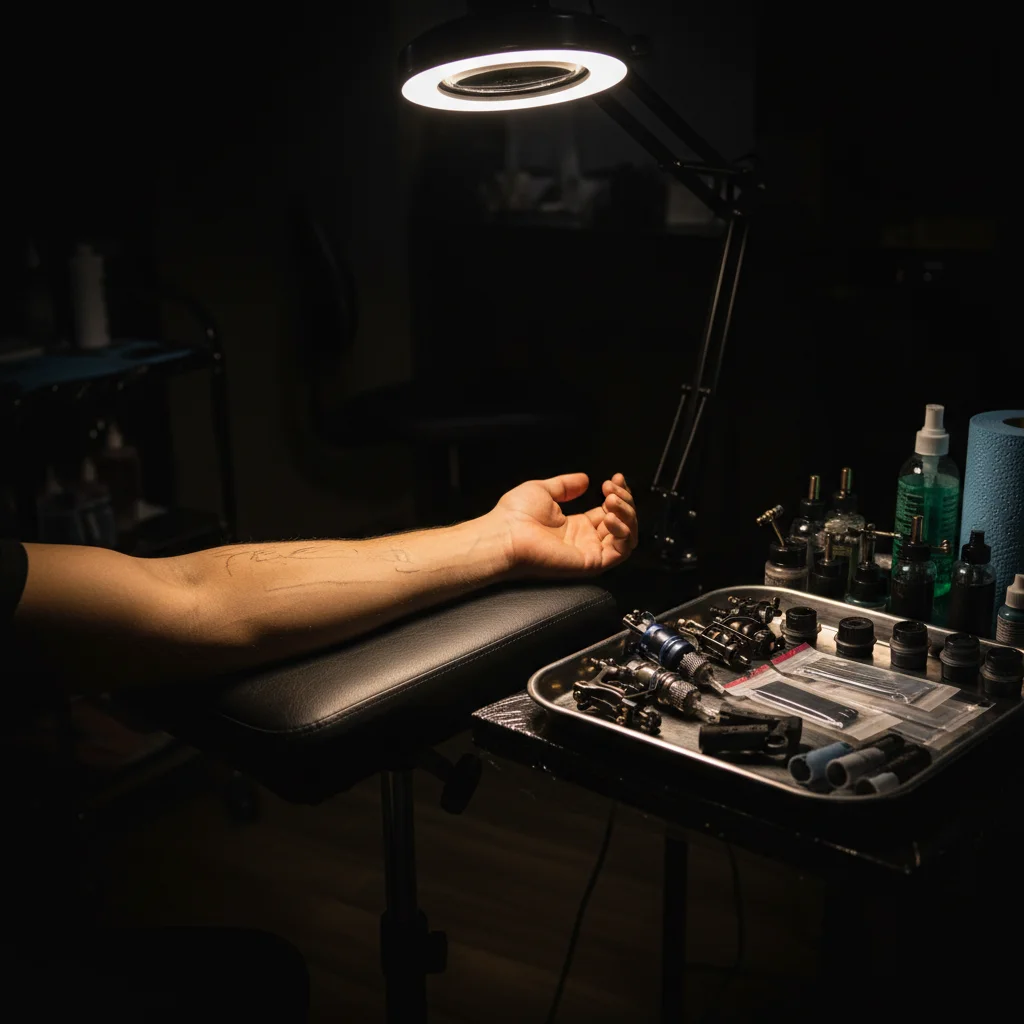
If pain is what’s loudest for you, the best preparation is practical. Eat a nutritious meal before your appointment and start hydrating the day before — low blood sugar makes pain sensitivity worse and is one of the most common reasons people feel faint in the chair. Tell your artist it’s your first time. Every experienced artist has a pacing instinct for first-timers and will check in throughout the session. That alone changes the dynamic significantly.
Design Anxiety Doesn’t Resolve With More Time
Design anxiety is the one that circles. You look at the reference image. You love it. You picture it slightly higher on your arm. You love that version too. You wonder if the original was better. You go back. Back and forth.
This is not indecision — it’s the absence of a reference point. You’re trying to compare something you can see (the design on someone else’s body, in someone else’s lighting) to something you can’t see (what it will actually look like on you, in your scale, in your placement).
More time doesn’t fix this. Another week of looking at the reference image doesn’t make the mental comparison any more accurate. What fixes it is seeing it.
TattThat does exactly this: upload a photo of the area you’re considering, place your design on it, and see a photorealistic rendering on your own skin — at the right scale, in your actual lighting. You can move it, resize it, check the inner forearm versus the outer forearm, try it a couple of inches higher. The comparison that felt impossible in your imagination becomes concrete in about thirty seconds.
Most people find that doing this either confirms what they already knew — and the second-guessing stops, because now there’s something real to stop at — or it surfaces a specific issue they can correct before sitting down with the artist. A scale problem. A placement that didn’t read the way they expected. Either outcome is better than showing up to the appointment still uncertain.
Placement Anxiety Is the Most Underrated Type
Placement anxiety is distinct from design anxiety: you know what you want, you just can’t quite pin down exactly where on your body it should live. This is responsible for a meaningful portion of post-tattoo regret — not because people chose the wrong design, but because the design landed in the wrong spot.
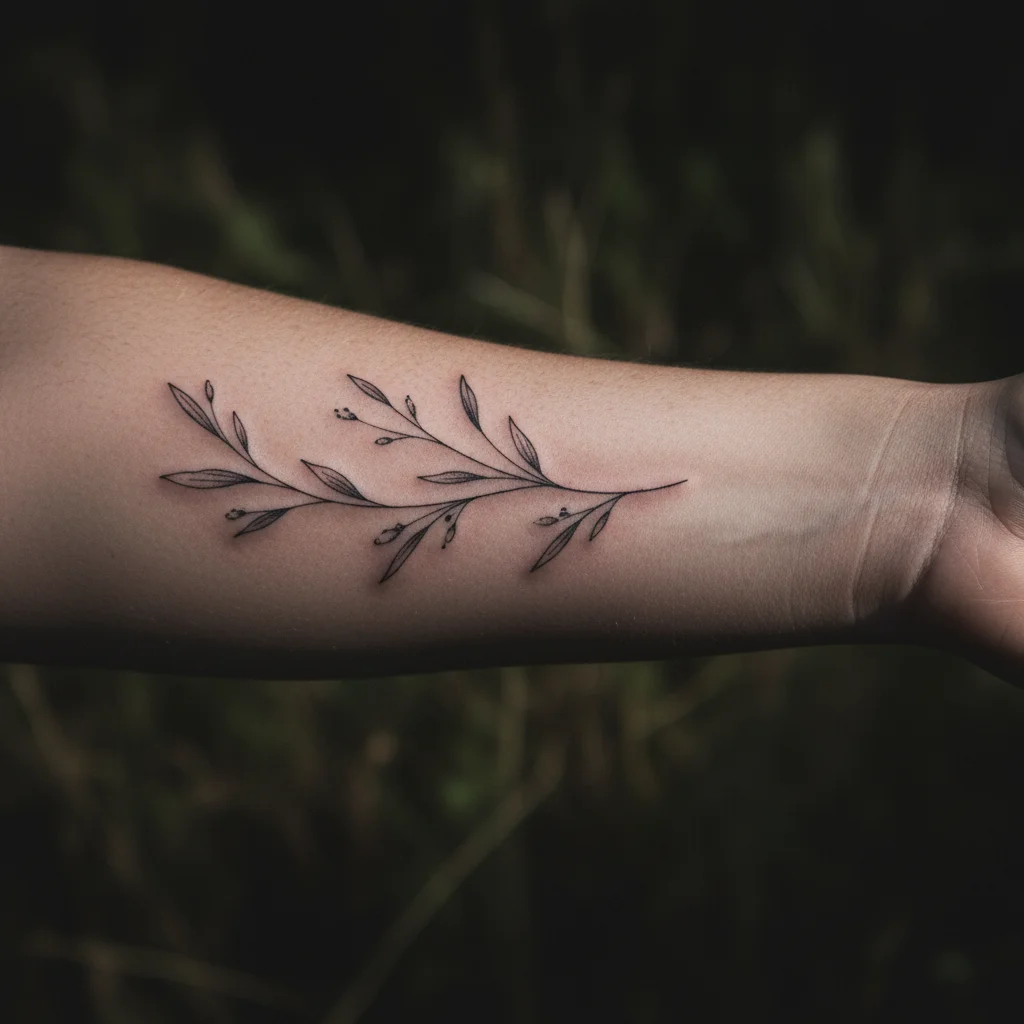
The typical version: you’ve been picturing the tattoo on your inner forearm, but you can’t visualize whether the scale is right or whether it should sit higher or lower. You can’t tell from a reference image on someone else’s body. So you arrive at the appointment with an approximation in your head rather than a clear picture, and you make the call in the moment based on a stencil.
The fix is seeing it placed before you get there. Not trying to imagine it more vividly — actually seeing it at the scale and position you’re considering and adjusting until it looks right. This is the use case TattThat was built around: placement is where visualization does the most work, and where the gap between imagination and reality is widest.
Threshold Anxiety Has a Different Shape
Threshold anxiety — the kind that comes from doing something permanent for the first time — doesn’t attach to a specific fear. It’s free-floating. You’ve resolved the design. You trust the artist. You know the placement. You’re still nervous.
This is a sign you’re taking the decision seriously, not a signal to reconsider. The data on tattoo regret is consistent here: people with zero pre-tattoo anxiety on their first session are disproportionately the ones who didn’t think carefully enough — who chased a trend, moved too fast, or didn’t sit with the permanence of it. Nervousness is not the problem. It’s the process working correctly.
The way through threshold anxiety is honesty about what’s actually unresolved. Not “I’m nervous” but “the specific thing I’m still uncertain about is ___.” If you can complete that sentence, you have something actionable to address. If you can’t — if the anxiety is genuinely free-floating with nothing specific underneath it — that’s almost always the threshold weight, not a warning. It fades after the first session and is rarely felt before any tattoo after that.
What the Day-Of Actually Feels Like
When you wake up the morning of the appointment and your stomach is in knots, the anxiety has usually consolidated around one thing. Name it. Pain? You have the tools: eat well, hydrate, communicate with your artist. Design? Open TattThat, look at it on your skin one more time. Placement? Same. Threshold? Let it be what it is.
What doesn’t help: Googling tattoo horror stories. (And if the deeper worry is whether you’ll still love the design in ten years, that’s a different question entirely — one worth working through in our guide to avoiding tattoo regret before your appointment.) Skipping breakfast. Caffeine without food. Asking three different people whether they think you should do it.
If you’re still in the earlier stage — design not fully locked, placement not decided, still figuring out the whole journey — the complete first tattoo guide covers the full process from design choice through aftercare, with links to every topic worth thinking through before you book.
What does: getting to the studio a few minutes early, trusting the person who’s about to do the work, and remembering that virtually everyone who gets through their first tattoo reports the same thing afterward: the anticipation was harder than the session itself.
When the needle finally touches skin, the anxiety usually collapses. You’re in it now. The uncertainty is gone. And almost no one who makes it to that moment regrets being there. The question you’ve been circling — will I be glad I did this? — tends to answer itself in the first five minutes.
The morning-after feeling is different too: you look at it in the mirror, still slightly red, exactly where you wanted it, and the months of second-guessing compress into something that now seems like it was never a real obstacle at all.
See It on Your Skin Before You Commit
Upload a photo, pick a design, and see exactly how it'll look — in seconds. 2 free previews, no card required.
Try TattThat Free →